The Hound of the Baskervilles Characters: Cast
Arthur Conan Doyle’s The Hound of the Baskervilles (1902) features what is widely considered the most richly textured and atmospherically unified cast of characters in Victorian detective fiction. Unlike the episodic short stories where characters appear for a single interview in Baker Street, this full-length novel allows Doyle to develop complex, sustained psychological portraits across the brooding, primeval expanse of Dartmoor.
From the heroic, independent field leadership of Dr. John H. Watson to the deceptive, charming naturalism of the murderous Jack Stapleton, each character is intimately bound to the novel’s central inquiry: can human reason triumph over ancient ancestral curses and primitive wilderness?
While our The Hound of the Baskervilles Study Guide outlines the plot architecture and The Hound of the Baskervilles Themes & Motifs examines its philosophical dualisms, this character analysis provides an exhaustive academic exploration of the psychological dynamics, structural foils, and dramatic personas of Doyle’s masterpiece.
Complete Character Roster & Structural Foils Matrix
Doyle structures his cast around contrasting approaches to truth, loyalty, and survival on the ancient moors:
| Character | Role / Archetype | Primary Attribute | Fatal Flaw / Vulnerability | Ultimate Fate |
|---|---|---|---|---|
| Sherlock Holmes | Master Detective; Shadow Strategist | Forensic genius; iron mental and physical discipline | Secretive methods; willingness to use Sir Henry as bait | Solves the case; shoots the hound; returns to London |
| Dr. John H. Watson | Field Investigator; Armed Guardian | Loyalty; military courage; observant recording | Cannot penetrate Stapleton’s deceit without Holmes’ guidance | Unmasks the plot; saves Sir Henry alongside Holmes |
| Sir Henry Baskerville | Last Heir of Baskerville Hall; Canadian Pioneer | Democratic frankness; bravery; vitality | Romantic susceptibility; reckless courage on the moor | Survives hound attack; recovers from nervous breakdown abroad |
| Jack Stapleton | Naturalist; Schoolmaster; Secret Baskerville Heir | Entomological intellect; chameleon charm; ruthlessness | Megalomania; atavistic greed; underestimates Holmes | Drowns in the quicksand of the Great Grimpen Mire |
| Beryl Stapleton | Stapleton’s Abused Wife (posing as his sister) | Moral conscience; protective tenderness; beauty | Coerced silence; physical and emotional abuse | Liberated from the attic; aids Holmes; moves to London |
| Dr. James Mortimer | Rural Physician; Antiquarian; Phrenologist | Scientific curiosity; devotion to the Baskerville line | Vulnerability to superstition; timid civilian nature | Accompanies Sir Henry on his convalescent world tour |
| Mr. John Barrymore | Hereditary Butler at Baskerville Hall | Domestic dignity; loyalty to family traditions | Secrets surrounding Selden; suspicion of guilt | Exonerated; continues serving Baskerville Hall |
| Mrs. Eliza Barrymore | Housekeeper at Baskerville Hall; Selden’s Sister | Maternal grief; unconditional family devotion | Moral conflict between servant duty and saving her brother | Weeps over Selden’s death; comforted by Sir Henry |
| Selden | The “Notting Hill Murderer”; Escaped Convict | Bestial survival instinct; raw physical violence | Trapped in Sir Henry’s clothes; hunted by the hound | Falls to his death from a granite tor pursued by the hound |
| Laura Lyons | Impoverished Coombe Tracey Typist; Frankland’s Daughter | Desperation for financial and social independence | Manipulated by Stapleton’s false promises of marriage | Confesses her role in luring Sir Charles to the yew alley |
1. Sherlock Holmes: The Hidden Hermit of the Tors
In The Hound of the Baskervilles, Sherlock Holmes undergoes an unprecedented structural displacement. For the middle third of the novel, Holmes is completely absent from the narrative foreground, operating as an unseen shadow:
The Moral Calculus of Using Live Bait
Holmes’ most ethically contentious action occurs in Chapter 14. Knowing that Stapleton will release the hound against Sir Henry along the path from Merripit House, Holmes permits Sir Henry to walk across the dark moor alone at night while Holmes, Watson, and Lestrade wait in ambush:
- If Holmes arrests Stapleton before the hound is released, the prosecution has no physical proof linking Stapleton to Sir Charles’ death.
- Therefore, Holmes uses Sir Henry as living bait to force Stapleton to release the hound, risking his client’s life to obtain forensic certainty.
- When an unexpected bank of dense white fog rolls off the Grimpen Mire, nearly cutting off their line of fire, Holmes experiences rare, visible terror: “Holmes wrung his hands in his fury and cursed the fog.” Only his peerless marksmanship prevents a catastrophic tragedy.
2. Dr. John H. Watson: The Independent Field Commander
The Hound of the Baskervilles represents Dr. Watson’s supreme literary hour. Entrusted by Holmes with the direct defense of Sir Henry, Watson steps into the role of primary investigator:
- The Epistolary Reporter: Watson writes five brilliant, exhaustive dispatches back to Baker Street and maintains a detailed private journal, capturing the psychological nuances of Dartmoor with exceptional literary power.
- Physical Courage: When footsteps echo outside his bedroom in Baskerville Hall, Watson grabs his candle and revolver, stalking Barrymore through the black corridors. When investigating the escaped convict on the moor, Watson braves the howling gale alone.
- The Confrontation with the Hermit: In Chapter 12, Watson tracks the mysterious watcher to the prehistoric stone hut, enters with his revolver drawn, and waits in the darkness to confront the stranger—demonstrating that Watson is a formidable military officer who refuses to yield to fear.
3. Sir Henry Baskerville: The Canadian Pioneer
Sir Henry Baskerville is the physical and symbolic counterweight to the decaying ancestral curse of his family:
- New-World Pragmatism: Having spent his youth farming in Canada, Sir Henry arrives in London wearing a tweed suit and carrying an open, democratic demeanor. He is completely free from European feudal pretensions and is initially amused by the legend of the hound.
- Reckless Bravery: When warned by Beryl Stapleton to flee Dartmoor immediately, Sir Henry adamantly refuses:
“There is no devil in hell, Watson, and there is no man upon earth who can prevent me from going to the home of my own people.”
- The Psychological Shattering: Despite his physical courage, Sir Henry is deeply vulnerable. He falls desperately in love with Beryl Stapleton, making Jack Stapleton’s betrayal all the more devastating. When the spectral, glowing hound charges him out of the fog, Sir Henry’s nervous system collapses. Although Holmes kills the beast before it tears out his throat, Sir Henry suffers a prolonged fever and nervous breakdown, requiring a worldwide voyage with Dr. Mortimer to restore his mental health.
4. Jack Stapleton: The Atavistic Naturalist
Jack Stapleton (born Rodger Baskerville) is the most formidable and psychologically terrifying villain in the Sherlock Holmes canon:
The Psychology of Cold Predation
Stapleton is an apex predator whose coldness is symbolized by his passion for collecting insects. He pins living butterflies to cork boards with the same dispassionate detachment with which he engineers the destruction of human lives:
- Manipulation of Laura Lyons: He promises marriage to the vulnerable, abandoned daughter of Frankland, inducing her to write the fatal midnight appointment letter to Sir Charles, then orders her to remain silent when Sir Charles dies.
- The Disguise as Sister: He forces his beautiful Costa Rican wife, Beryl Garcia, to pose as his unmarried sister to entice Sir Henry into visiting his isolated home at Merripit House.
- The Poet of Murder: When Stapleton speaks of the treacherous Grimpen Mire, his eyes sparkle with sadistic delight: “A false step yonder means death to man or beast. Only yesterday I saw one of the moor ponies wander into it. It never came out.” His death in the Mire is the ultimate cosmic justice: the predator is swallowed by his own lair.
5. Beryl Stapleton: The Voice of Conscience
Beryl Stapleton (née Garcia) is the moral center of the Dartmoor narrative:
- The Secret Warning: Trapped beneath her husband’s abusive control, Beryl risks her life to save Sir Henry. Mistaking Watson for Sir Henry on their first meeting on the moor, she passionately warns him:
“Go back! Go straight back to London, this instant… Go back and never set foot upon the moor again!”
- The Complicity of Silence: Although terrified of her husband, her moral conscience refuses to allow murder. When she discovers that Jack intends to unleash the hound on Sir Henry that very evening, she attempts to stop him. Stapleton brutally beats her, ties her to an upright beam in the attic of Merripit House, and gags her mouth with a towel.
- The Liberation: When Holmes and Watson break into Merripit House following the hound’s death, they untie Beryl, who immediately reveals the secret pathway through the Great Grimpen Mire, ensuring her husband’s pursuit and ultimate doom.
6. The Supporting Ensemble: Foils of Moor Society
Doyle enriches the Dartmoor world with authentic, idiosyncratic secondary figures:
Mr. and Mrs. Barrymore: The Haunted Servants
John and Eliza Barrymore carry the weight of ancestral servitude. John’s midnight candle signals from the west window are revealed not as a conspiracy against Sir Henry, but as a desperate act of fraternal mercy: Mrs. Barrymore’s younger brother is the escaped murderer Selden, whom she cannot bear to see starve on the cold granite tors.
Dr. James Mortimer: The Antiquarian Physician
Dr. Mortimer is the character who launches the entire inquiry. His eccentric passion for comparative skull measurements (phrenology) provides comic relief, while his genuine terror when presenting the ancient manuscript and paw prints establishes the novel’s dark, supernatural atmosphere.
Comparative Matrix: Character Dynamics & Foils
| Primary Character | Foil Character | Central Thematic Contrast |
|---|---|---|
| Sherlock Holmes | Jack Stapleton | Creative scientific genius dedicated to justice vs. perverted scientific intellect dedicated to murder. |
| Dr. John H. Watson | Dr. James Mortimer | The disciplined military officer and empirical observer vs. the nervous antiquarian who surrenders to superstition. |
| Sir Henry Baskerville | Sir Hugo Baskerville | Democratic new-world vitality and chivalry vs. feudal seventeenth-century cruelty and debauchery. |
| Beryl Stapleton | Laura Lyons | The loving wife who risks her life to warn the victim vs. the naive woman manipulated into setting the trap. |
| Jack Stapleton | Selden (Convict) | The polished, educated sociopath who murders with phosphorus vs. the primitive brute who kills in blind panic. |
Recommended Critical Edition
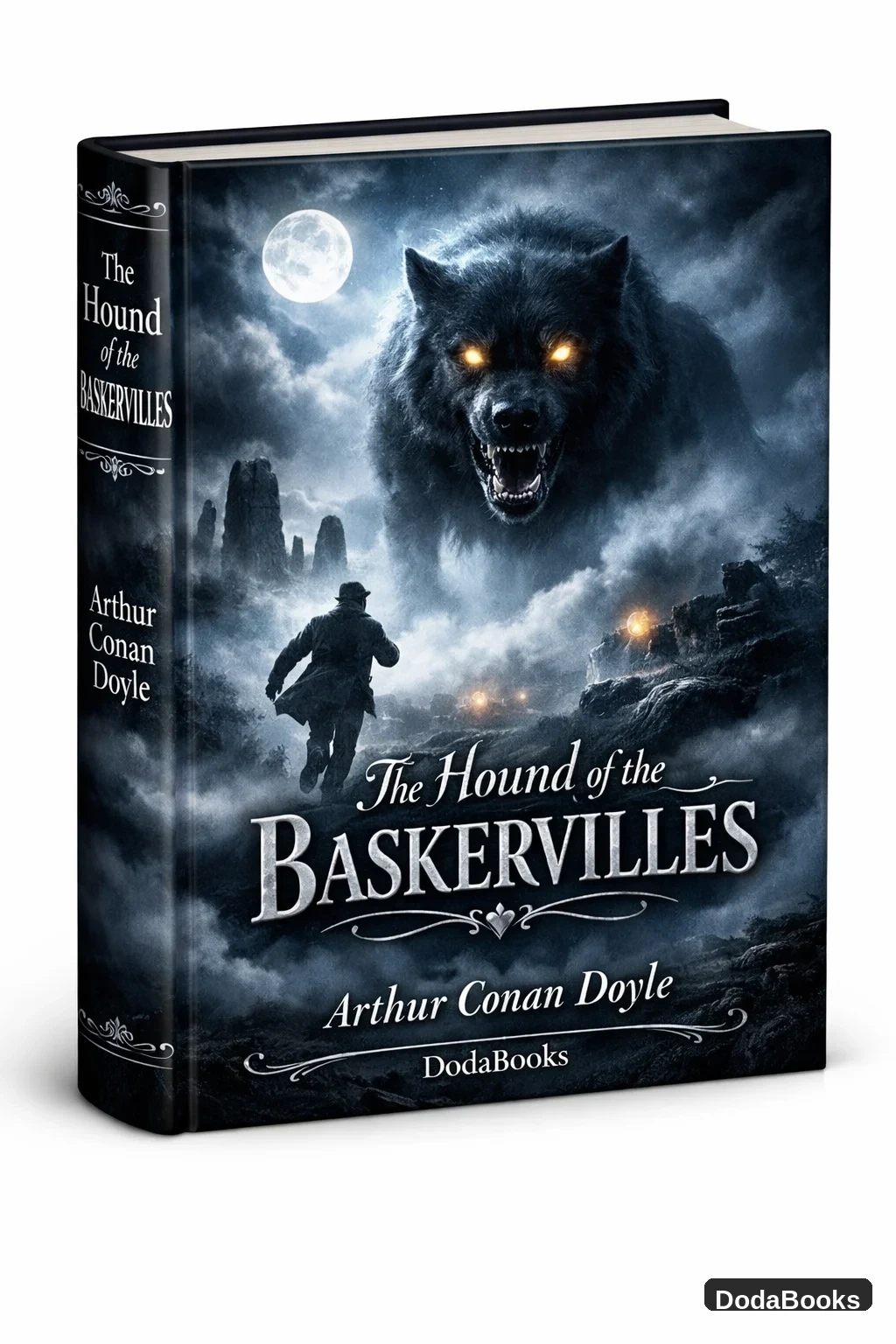
For university literature students, mystery enthusiasts, and serious collectors seeking the definitive text with complete character analyses, historical notes on Victorian bloodhound breeding, and all sixty original Sidney Paget illustrations, we recommend the unabridged edition from DodaBooks:
Frequently Asked Questions
How did Jack Stapleton intend to claim the Baskerville estate without exciting suspicion?
Holmes explains in the final chapter that Stapleton had three potential strategies for claiming the fortune from abroad. He could have claimed the inheritance directly through his South American identity as Rodger Baskerville; he could have adopted an elaborate disguise and claimed it in London through lawyers; or he could have arranged for an accomplice to inherit and liquidated the estate into liquid cash. Because Sir Henry’s death would leave Stapleton as the undisputed next of kin, his primary goal was simply to extinguish the direct line of heirs.
Why does Stapleton steal two different boots from Sir Henry at the London hotel?
Stapleton initially bribes an attendant at the Northumberland Hotel to steal one of Sir Henry’s boots so that his hound can be trained on Sir Henry’s personal scent. However, the first boot stolen was a brand-new tan boot that Sir Henry had never worn, which contained no human scent. Stapleton was forced to return the new boot and steal an older, black boot that Sir Henry had worn, successfully obtaining the scent needed for the hound to track Sir Henry across Dartmoor.
What is the psychological significance of Beryl Stapleton posing as Jack’s sister?
Forcing his wife to pose as his sister allowed Stapleton to deploy her beauty as a social and romantic lure while keeping his domestic life free from legal scrutiny. By presenting her as an eligible, unmarried young woman, Stapleton successfully enticed Sir Henry into pursuing her, ensuring that Sir Henry would repeatedly cross the lonely moor between Baskerville Hall and Merripit House, creating the ideal conditions for a fatal nocturnal ambush.
Related Masterwork Guides & Deconstructions
Continue your exploration of classic detective fiction, Victorian literature, and character dynamics with our companion guides:
- The Hound of the Baskervilles Study Guide: Plot & Themes: The foundational comprehensive study guide to Doyle’s Dartmoor masterwork.
- The Hound of the Baskervilles Themes & Motifs: Deconstruct science vs. superstition, atavism, and the Great Grimpen Mire.
- Sherlock Holmes Characters: Holmes & Watson: Analyze Holmes, Watson, Irene Adler, and Inspector Lestrade in The Adventures.
- Dracula Characters Analysis: Van Helsing & Foils: Explore Bram Stoker’s Crew of Light and their battle against Gothic evil.
- Dr. Jekyll and Mr. Hyde Characters: Jekyll & Hyde: Examine Victorian duality, atavistic regression, and social hypocrisy.