Pride and Prejudice Themes & Symbolism: Class, Entailment & Pemberley
Jane Austen’s Pride and Prejudice (1813) is a masterclass in social realism because its surface narrative of romantic courtship is anchored in the material, legal, and cognitive structures of Regency England. The novel examines how human beings navigate rigid class hierarchies, gender disenfranchisement, and personal self-deception.
Far from offering escapist nostalgia, Austen utilizes physical architecture, legal doctrines, walking journeys, and private epistolary texts as dense symbolic vehicles. This guide provides students, literary scholars, and educators with a comprehensive analysis of the central themes and symbolic motifs across the novel.
For character profiles, consult our companion Pride and Prejudice Characters Analysis. For fast facts, plot summaries, and financial arithmetic, see the primary Pride and Prejudice Study Guide.
Central Thematic Architecture
Austen structures the narrative around four interlocking socioeconomic and philosophical tensions:
Fee tail male entailment and the matrimonial market: marriage as an existential imperative for female shelter and survival.
Reciprocal blind spots: aristocratic arrogance and satirical vanity distorting perception until humbled by truth.
Feudal gentry (Pemberley) opening its gates to the vitality, sense, and commercial integrity of the rising professional class (Gardiners).
Spoken wit prone to theatrical performance and deceit, contrasted with documented private letters that reveal objective facts.
1. Marriage as an Economic Institution vs. Intellectual Companionship
In twenty-first-century culture, marriage is conceived primarily as an individual romantic choice. In Austen’s 1813 Britain, marriage was the sole legal, economic, and social career available to gentry women. Because women could not enter professions, inherit entailed estates, or easily retain independent capital upon marriage, the matrimonial contract was literally a matter of food, shelter, and class survival.
Austen does not condemn the economic reality of marriage; rather, she condemns marriages built exclusively on either raw financial greed or reckless physical infatuation:
The Economic Spectrum of Matrimony
- The Purely Mercenary Model (Mr. Collins & Charlotte Lucas): Charlotte’s marriage to Collins is an unsparing transaction. Austen forces the reader to acknowledge the harsh social reality that a woman without a dowry has no right to demand romantic love. Charlotte gains domestic management, financial security, and social status, but pays with a husband whose mind she must actively avoid for the rest of her life.
- The Recklessly Physical Model (Lydia Bennet & George Wickham): Lydia and Wickham elope based on shallow physical attraction and juvenile vanity. Without economic foundations or shared moral principles, their passion burns out within months, leaving them dependent on handouts from relatives and trapped in perpetual debt.
- The Disillusioned Cynical Model (Mr. & Mrs. Bennet): Captivated by youth and beauty in his twenties, Mr. Bennet married a woman whose intellectual triviality soon killed his affection. His response is not physical cruelty, but cynical detachment: retreating to his library and abandoning his parental duty to discipline his younger daughters.
- The Ideal Conjugal Partnership (Elizabeth Bennet & Fitzwilliam Darcy): Austen presents the union of Elizabeth and Darcy as the triumphant ideal. It does not ignore economics—Darcy’s £10,000-a-year income provides complete financial liberation—but it grounds that wealth in mutual moral accountability, shared intellectual humor, and reciprocal respect.
2. Pride vs. Prejudice: Two Sides of Cognitive Distortion
The novel’s title encapsulates its central psychological theme. However, Austen does not assign pride exclusively to Darcy and prejudice exclusively to Elizabeth; both characters suffer from both flaws, creating a mirror of cognitive distortion:
| Analytic Dynamic | Fitzwilliam Darcy | Elizabeth Bennet |
|---|---|---|
| Manifestation of Pride | Aristocratic pride in ancient lineage, elite status, and Pemberley’s reputation. | Intellectual pride in her own wit, quick psychological discernment, and satirical ability. |
| Manifestation of Prejudice | Class prejudice against rural Hertfordshire society, provincial trade, and vulgar in-laws. | Personal prejudice against Darcy sparked by his insult to her appearance at the assembly ball. |
| Catalyst of Recognition | Elizabeth’s scathing rejection of his first proposal at Hunsford Parsonage (Chapter 34). | Reading Darcy’s documented written deposition in his private letter (Chapter 36). |
| Moral Culmination | Overcomes pride to humbly serve Elizabeth’s family through the anonymous rescue of Lydia. | Overcomes prejudice to acknowledge Darcy’s noble character and proclaim: “Till this moment I never knew myself.” |
In Chapter 5, Mary Bennet provides Austen’s definitive technical distinction between pride and vanity:
“Pride and vanity are different things, though the words are often used synonymously. A person may be proud without being vain. Pride relates more to our opinion of ourselves, vanity to what we would have others think of us.”
Darcy is proud, but not vain; he genuinely cares about moral virtue and honorable conduct, regardless of what the public thinks. In contrast, Wickham and Mr. Collins are entirely vain; they care only for theatrical appearances, superficial applause, and external titles.
3. Class Mobility and the Changing Face of English Wealth
Written against the backdrop of the Napoleonic Wars and the Industrial Revolution, Pride and Prejudice captures a historical pivot point: the tension between ancient landed aristocracy and mercantile trade capital.
- The Stagnant Aristocracy (Lady Catherine de Bourgh & Caroline Bingley): Lady Catherine represents feudal entitlement detached from moral responsibility. She believes her pedigree gives her the right to dictate how village cottagers pack their closets and who her nephew may marry. Her sisterly counterpart, Caroline Bingley, is desperately trying to hide that the Bingley family fortune was earned in Northern trade, sneering at Elizabeth’s London relatives to fabricate an illusion of ancient blood.
- The Generous Commercial Class (Mr. and Mrs. Gardiner): Mr. Gardiner makes his living in trade and lives near his warehouse in Cheapside (Gracechurch Street)—a location Caroline Bingley considers utterly vulgar. Yet the Gardiners are the most sensible, educated, cultured, and benevolent figures in the novel. It is Uncle Gardiner who negotiates Wickham’s settlement in London and Aunt Gardiner who provides Elizabeth with wise maternal guidance.
- The Modern Synthesis at Pemberley: When Darcy embraces the Gardiners at Pemberley and invites Mr. Gardiner to fish on his private streams, the rigid boundaries of English feudalism dissolve. Darcy’s union with Elizabeth signifies that England’s future depends upon landed aristocracy opening its doors to the vitality, intelligence, and moral strength of the professional and mercantile classes.
4. Primary Symbolic Motifs
Austen’s symbolism is realistic and grounded in the material environments of her characters:
Grandeur harmonized with unadorned nature. Mirrors Darcy's unpretentious benevolence as a fair landlord and moral steward.
Elizabeth's brisk country walks symbolize independence, physical vitality, and intellectual freedom defying cramped drawing-room decorum.
Unmediated documents of legal precision and sincere confession that shatter illusions created by spoken conversation and gossip.
Public stages where socioeconomic value, marital desirability, etiquette, and vulgarity are enacted and observed.
Pemberley: Architecture as Moral Portrait
In Chapter 43, Elizabeth’s visit to Pemberley marks the aesthetic and psychological turning point of the novel. Pemberley is not merely a grand mansion; it is Darcy’s soul made physical:
“It was a large, handsome stone building, standing well on rising ground, and backed by a ridge of high woody hills; and in front, a stream of some natural importance was swelled into greater, but without any artificial appearance. Its banks were neither formal nor falsely adorned. Elizabeth was delighted. She had never seen a place where nature had done more, or where natural beauty had been so little counteracted by an awkward taste.”
The architecture contrasts sharply with Lady Catherine’s Rosings Park, where every chimney, window, and miniature glazing is cataloged to intimidate visitors with its cost. Pemberley demonstrates that Darcy respects nature rather than dominating it, treating his land, his tenants, and his servants with organic harmony. When Elizabeth admits to Jane in Chapter 59 that her love dates “from my first seeing his beautiful grounds at Pemberley,” she is not confessing to greed; she is recognizing that a man who manages such an estate with such unpretentious benevolence possesses an exemplary moral character.
Walking and Female Mobility
Throughout the novel, Elizabeth’s physical mobility reflects her psychological freedom:
- In Chapter 7, when Jane falls ill at Netherfield, Elizabeth refuses to wait for a carriage and walks three miles through ankle-deep mud alone. The Netherfield ladies are appalled by her “dirty petticoats” and wild hair, but Darcy is captivated by the healthy glow of her complexion and the brilliance of her eyes.
- In Chapter 35, Elizabeth receives Darcy’s letter while walking outdoors in the woods of Rosings Park, pacing the gravel paths as she wrestles with her shattered assumptions.
- Her open-air movement symbolizes her refusal to be constrained by Regency indoor parlor decorum. Unlike women who sit passively sewing, Elizabeth moves through the landscape under her own power.
Letters: The Inviolable Evidence of Truth
While spoken conversations in ballrooms are fraught with flirting, posturing, and misunderstandings, Austen reserves written letters for moments of unvarnished truth:
- Darcy’s Letter (Chapter 35): Deliberately handed to Elizabeth in silence, Darcy’s letter refuses to engage in oral debate. It requires Elizabeth to read, reread, and reflect in solitude, establishing the documentary foundation for her moral conversion.
- Mr. Gardiner’s Letter (Chapter 52): Details the secret financial transactions that saved Lydia, operating as an unadorned legal brief of Darcy’s selfless generosity.
- Lady Catherine’s Letters: Bombastic, commanding, and self-important, revealing how aristocratic power degenerates into petty bullying when committed to paper.
Recommended Critical Editions
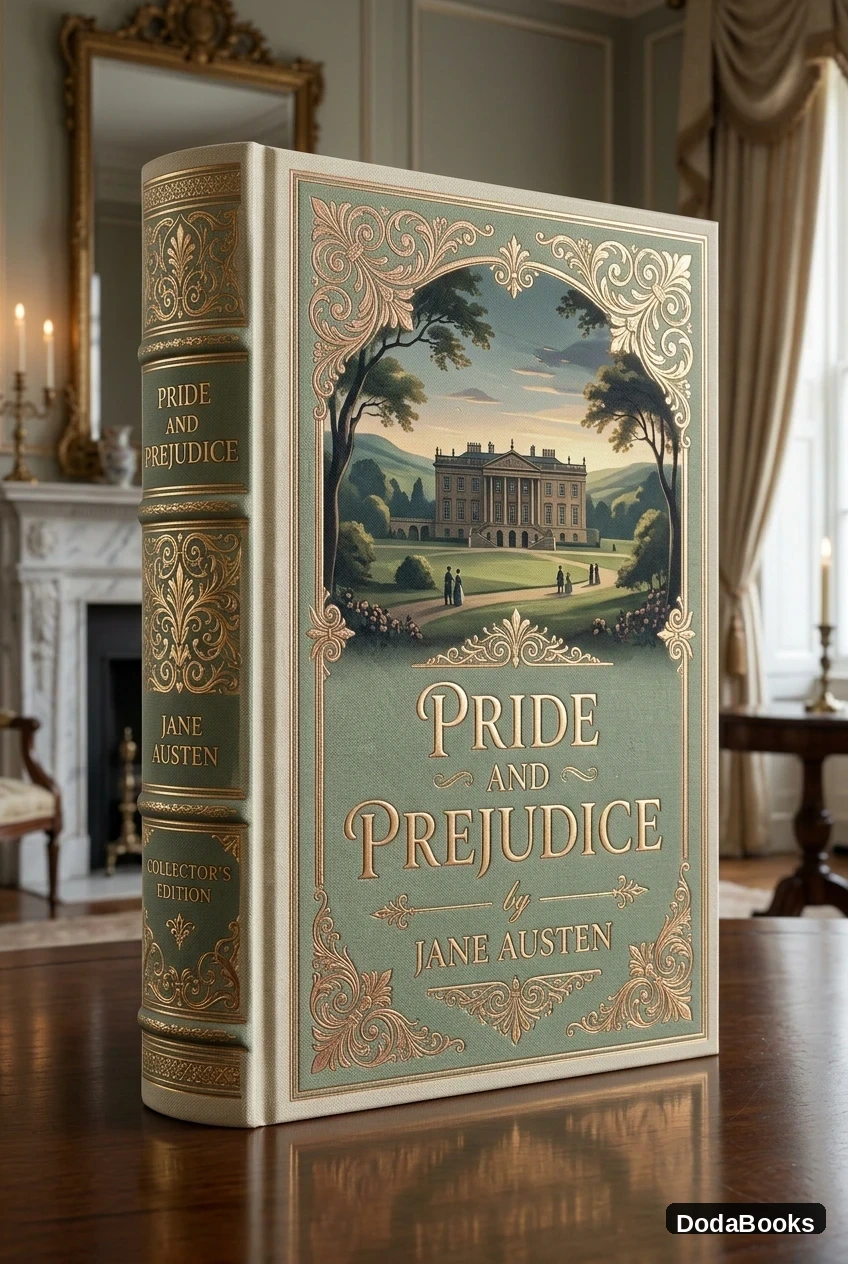
Pride and Prejudice: Annotated Reader's Edition
The complete unabridged 1813 classic formatted with clean typography and active navigation. Features 240+ scholarly annotations detailing Regency currency conversions, entail law, carriage travel times, and textual variants.
- ✓ Complete Unabridged 1813 Text
- ✓ 240+ Regency Currency & Legal Footnotes
- ✓ Active Interactive Table of Contents
- ✓ DRM-Free Instant EPUB & PDF Download
Related Literature Study Guides
Explore our comprehensive library of literary masterwork analyses:
- Pride and Prejudice Study Guide: The foundational master guide with 2-minute summary, fast facts, and chapter outlines.
- Pride and Prejudice Characters Analysis: Detailed psychological breakdowns of Elizabeth, Darcy, Wickham, and Lady Catherine.
- Moby-Dick Themes & Symbolism: An analysis of whiteness, the Spanish doubloon, the try-works, and cosmic fatalism.
- The Pequod in Moby-Dick: Ship Meaning & Symbolism: The barbaric architecture and 30-man union microcosm of Melville’s whaleship.
- The Great Gatsby Study Guide: Spatial class division and modernist disillusionment in Fitzgerald’s masterwork.
- Frankenstein Study Guide: The Vitalism controversy, Romantic science, and paternal responsibility in Mary Shelley.
- Crime and Punishment Study Guide: Russian nihilism, utilitarian rationalism, and spiritual resurrection in Dostoevsky.
Frequently Asked Questions
What does Pemberley symbolize in Pride and Prejudice?
Pemberley symbolizes Fitzwilliam Darcy’s true character, moral integrity, and social responsibility. Unlike the artificial, ostentatious grandeur of Lady Catherine’s Rosings Park, Pemberley harmonizes with natural beauty without vulgar display, proving to Elizabeth that Darcy possesses genuine aesthetic taste, benevolent landlord stewardship, and quiet dignity.
How do letters function as a symbol of truth in the novel?
In Pride and Prejudice, spoken dialogue is often compromised by social performance, wit, or vanity. Letters—especially Darcy’s explanatory letter in Chapter 35 and Mr. Gardiner’s letter in Chapter 52—function as legal depositions of objective truth that demand private, rigorous reflection and force characters to overcome their cognitive biases.
What is the thematic distinction between pride and vanity in Austen’s work?
In Chapter 5, Mary Bennet articulates Austen’s key thematic distinction: “Pride relates more to our opinion of ourselves, vanity to what we would have others think of us.” Darcy suffers from pride in his ancient lineage and integrity, while characters like Wickham and Mr. Collins suffer from vanity, constantly seeking shallow external validation.