Dracula Characters: Analysis of Dracula, Mina & Crew
When Bram Stoker published Dracula in 1897, he established the definitive myth of the modern vampire. Far from being a relic of medieval folklore, Stoker’s masterpiece is a fiercely contemporary late-Victorian gothic thriller that stages an epic clash between ancient aristocratic predation and modern technological rationalism.
At the narrative’s epicenter is Count Dracula—the centuries-old Transylvanian warlord who weaponizes biological contagion and English property law to conquer London. Countering this supernatural invasion is the “Crew of Light,” orchestrated not by aristocratic warriors, but by the intellectual brilliance of Mina Harker, the forensic syncretism of Professor Abraham Van Helsing, and a circle of devoted men armed with typewriters, phonographs, blood transfusions, and sacred relics.
While our companion Dracula Study Guide and Dracula Themes & Symbolism explore imperial reverse-colonization and blood currencies, this comprehensive study provides an academic character analysis of Stoker’s ensemble, dissecting their psychological motivations, gender dynamics, and symbolic roles.
Master Character Roster & Archetypal Matrix
| Character | Social Role | Archetype | Core Conflict & Symbolic Function |
|---|---|---|---|
| Count Dracula | Transylvanian Boyar / Un-Dead Lord | The Feudal Aristocratic Predator | Feudal blood conquest & reverse colonization vs. modern science and holy relics. |
| Mina Harker | Assistant schoolmistress / Typist | The New Woman Intellectual Hero | Patriarchal exclusion vs. technological forensic collation and telepathic tracking. |
| Prof. Abraham Van Helsing | Dutch polymath & alienist | The Syncretic Philosopher-Scientist | Medical skepticism vs. spiritual warfare; uniting empirical data with Catholic ritual. |
| Jonathan Harker | Young London solicitor | The Traumatized Bourgeois Professional | Victorian rationalism and masculine agency vs. emasculating gothic imprisonment. |
| Lucy Westenra | Affluent Victorian socialite | The Dangerous Erotic Fallen Angel | Pure domestic virginity vs. predatory, sexually voracious vampiric contagion. |
| R.M. Renfield | Asylum inmate / Zoophagous patient | The Grotesque Disciple & Tragic Rebel | Insane devotion to consuming life vs. sacrificial redemption to save Mina’s soul. |
| Dr. John Seward | Asylum director / Physician | The Materialist Alienist | Positivist medical science vs. psychological horror recorded on phonograph cylinders. |
| Quincey Morris | Wealthy Texan adventurer | The Frontier Chivalric Martyr | New World martial vitality and self-sacrifice vs. ancient Old World monstrosity. |
1. Count Dracula: The Aristocratic Parasite and Imperial Invader
Count Dracula is the ultimate figure of late-Victorian paranoia: an ancient feudal predator who embodies the decay of the European aristocracy and the terror of reverse colonization:
The Boyar Warlord
Dracula is not an ordinary supernatural ghoul; he is a historical warlord, a descendant of Attila the Hun and the fierce Voivodes of the Szekelys:
- The Feudal Blood Pride: In Chapter 3, Dracula passionately recounts his family’s military battles against the Ottoman Turks, boasting: “Our blood is too old to be mixed with that of peasants… We Szekelys have a right to be proud!” Dracula views human beings as feudal serfs and livestock meant to nourish his aristocratic bloodline.
- The Modern Invasion Strategy: Dracula spends decades preparing for his conquest of England. He studies English law, books, geography, and train routes in his castle library, using London solicitor Jonathan Harker to purchase Carfax Abbey near London. He recognizes that in the modern world, conquest is achieved not by broadswords, but by deeds, bank drafts, and cargo transport ships.
- The Physiological Abomination: Stoker describes Dracula through Cesare Lombroso’s late-nineteenth-century theory of atavistic criminology: aquiline nose like an eagle’s beak, pointed ears, hair growing in the centers of his palms, sharp canine teeth, and foul breath smelling of corruption and ancient blood.
Dracula represents the parasitic survival of feudal aristocracy: feeding off the productive bourgeois labor of London, draining its women, and corrupting its moral foundations.
2. Mina Harker: The New Woman as Savior of the Empire
While contemporary Victorian readers often perceived Mina Harker through the conventional lens of the pure, submissive domestic angel, modern literary criticism recognizes Mina as the true intellectual protagonist and savior of Dracula:
The Technological Architect of the Archive
The novel Dracula exists as an epistolary document solely because Mina Harker constructed it:
- The Information Engineer: Mina is an expert stenographer and typist. While the men rush about with pistols and knives, Mina sits at her portable typewriter, converting Jonathan’s shorthand Transylvanian journal, Dr. Seward’s phonograph wax cylinders, telegrams, and newspaper clippings into three identical, chronologically indexed dossiers.
- Forensic Deduction: By cross-referencing shipping logs from Whitby with train timetables, Mina deduces the exact location of Dracula’s fifty boxes of Transylvanian earth across London, enabling the men to sterilize them with consecrated hosts.
Mina embodies the progressive “New Woman” of the 1890s: intellectually brilliant, technically skilled, emotionally courageous, and professionally indispensable. Her intellect preserves the British Empire from biological extinction.
3. Professor Abraham Van Helsing: The Syncretic Man of Science and Faith
Professor Abraham Van Helsing, M.D., Ph.D., of Amsterdam, is the philosophical general of the Crew of Light. Stoker crafts Van Helsing as a revolutionary intellectual type: the syncretic philosopher-scientist:
Bridging the Positivist Divide
In late-nineteenth-century Europe, scientific rationalism and religious faith were locked in bitter conflict following Darwin’s theory of evolution. British physicians like Dr. John Seward were rigid materialists who dismissed all phenomena outside empirical laboratory medicine:
- The Failure of Pure Materialism: When Lucy Westenra wastes away from mysterious blood loss, Dr. Seward is completely baffled. His medical instruments and chemical tests cannot explain why four full blood transfusions vanish overnight.
- Van Helsing’s Syncretism: Van Helsing possesses an open mind: “You are clever man, friend John; but you do not let your eyes see nor your ears hear… It is the fault of our science that it wants to explain all; and if it explain not, then it says there is nothing to explain.”
- Van Helsing unites cutting-edge medical science (hypodermic injections, blood transfusions, tracheotomies) with ancient Catholic sacramental weapons (crucifixes, garlic flowers, wild rose brambles, and consecrated communion wafers).
4. Jonathan Harker: Trauma, Emasculation, and Rebirth
Jonathan Harker begins the novel as the quintessential young bourgeois London professional: a newly certified solicitor equipped with shorthand notebooks, railway guides, and polite English manners:
The Gothic Emasculation in Castle Dracula
Entering Transylvania, Jonathan’s rational Victorian worldview is systematically dismantled:
- The Trapped Legal Clerk: Jonathan discovers that he is not a guest, but a prisoner. The doors are locked, wolves patrol the battlements, and Dracula scales the sheer vertical castle walls head-down like a giant bat.
- The Seduction by the Weird Sisters: In Chapter 3, Jonathan is confronted by Dracula’s three vampire brides. Paralyzed between sexual desire and mortal dread, Jonathan experiences the collapse of Victorian masculine agency: “There was a deliberate voluptuousness which was both thrilling and repulsive, and as she arched her neck she actually licked her lips like an animal… I closed my eyes in a languorous ecstasy and waited—waited with beating heart.”
- The Brain Fever Rupture: Escaping the castle by climbing down into the Danube river, Jonathan collapses into hysterical “brain fever” in a Budapest hospital, his hair turned prematurely white, his nerves shattered by trauma.
Jonathan’s redemption occurs when Mina validates his reality. By transcribing his journal, Mina proves that he was not insane. Jonathan reclaims his masculine agency, wielding a heavy Nepalese kukri knife in the snows of the Borgo Pass to shear off Dracula’s head in the final battle.
5. Lucy Westenra: Erotic Contagion and the Fallen Angel
Lucy Westenra is the tragic, beautiful Victorian socialite whose fate illustrates late-nineteenth-century moral and sexual anxieties:
From Domestic Coquette to Predatory Demon
- The Victorian Belle: In life, Lucy is pure, affectionate, and flirtatious. In a single day, she receives three marriage proposals from three noble suitors (Arthur Holmwood, Dr. Seward, and Quincey Morris), famously lamenting: “Why can’t they let a girl marry three men, or as many as want her?”
- The Somnambulic Breach: Lucy’s sleepwalking habit creates the physical vulnerability that allows Dracula to feast upon her in the Whitby churchyard, initiating her physical decline.
- The “Bloofer Lady”: Reanimated as an Un-Dead vampire, Lucy’s personality undergoes a terrifying moral inversion. The sweet, gentle girl becomes a voluptuous, sexually aggressive demon who preys on small children in Hampstead Heath, her eyes burning with unholy lust and her mouth smeared with infant blood.
The horrifying staking ritual in Chapter 16—where Arthur Holmwood drives a wooden stake through Lucy’s thrashing, screaming body while Van Helsing reads sacred prayers—is a brutal act of Victorian purification. Stoker restores Lucy to peace only by violently purging her of her dangerous, autonomous sexuality.
6. R.M. Renfield and the Suitor Triumvirate
Stoker enriches his dramatic canvas through contrasting figures representing psychological obsession and chivalric brotherhood:
R.M. Renfield: The Zoophagous Disciple
Confined in Dr. Seward’s Carfax lunatic asylum, Renfield is Dracula’s psychological herald:
- The Calculus of Consuming Life: Renfield believes that consuming living organisms absorbs their life force. He catches flies, feeds them to spiders, feeds the spiders to sparrows, and begs for a cat, enacting Dracula’s hematophagy in a grotesque miniature scale.
- The Sacrificial Rebellion: Despite his madness, Renfield retains moral consciousness. When Dracula uses him to gain entry to the asylum to attack Mina, Renfield realizes the horror of what he has done. In Chapter 21, Renfield attacks the Count with his bare hands, suffering a broken back and crushed skull, dying an honorable martyr to warn the others.
The Brotherhood of Suitors: Arthur, Seward, and Quincey
The three men who courted Lucy Westenra unite under Van Helsing into a selfless brotherhood:
- Arthur Holmwood (Lord Godalming): The English aristocrat who provides financial resources, titles, and political authority to cut through bureaucratic red tape.
- Dr. John Seward: The modern medical alienist who records events on phonograph cylinders, representing the honest limits of empirical science.
- Quincey Morris: The rugged American cowboy from Texas, armed with a Winchester rifle and bowie knife, whose New World courage complements Old World scholarship. In the final confrontation, Quincey plunges his bowie knife into Dracula’s heart, dying of mortal wounds in the Transylvanian snow, honored as the ultimate martyr of chivalry.
Recommended Critical Edition
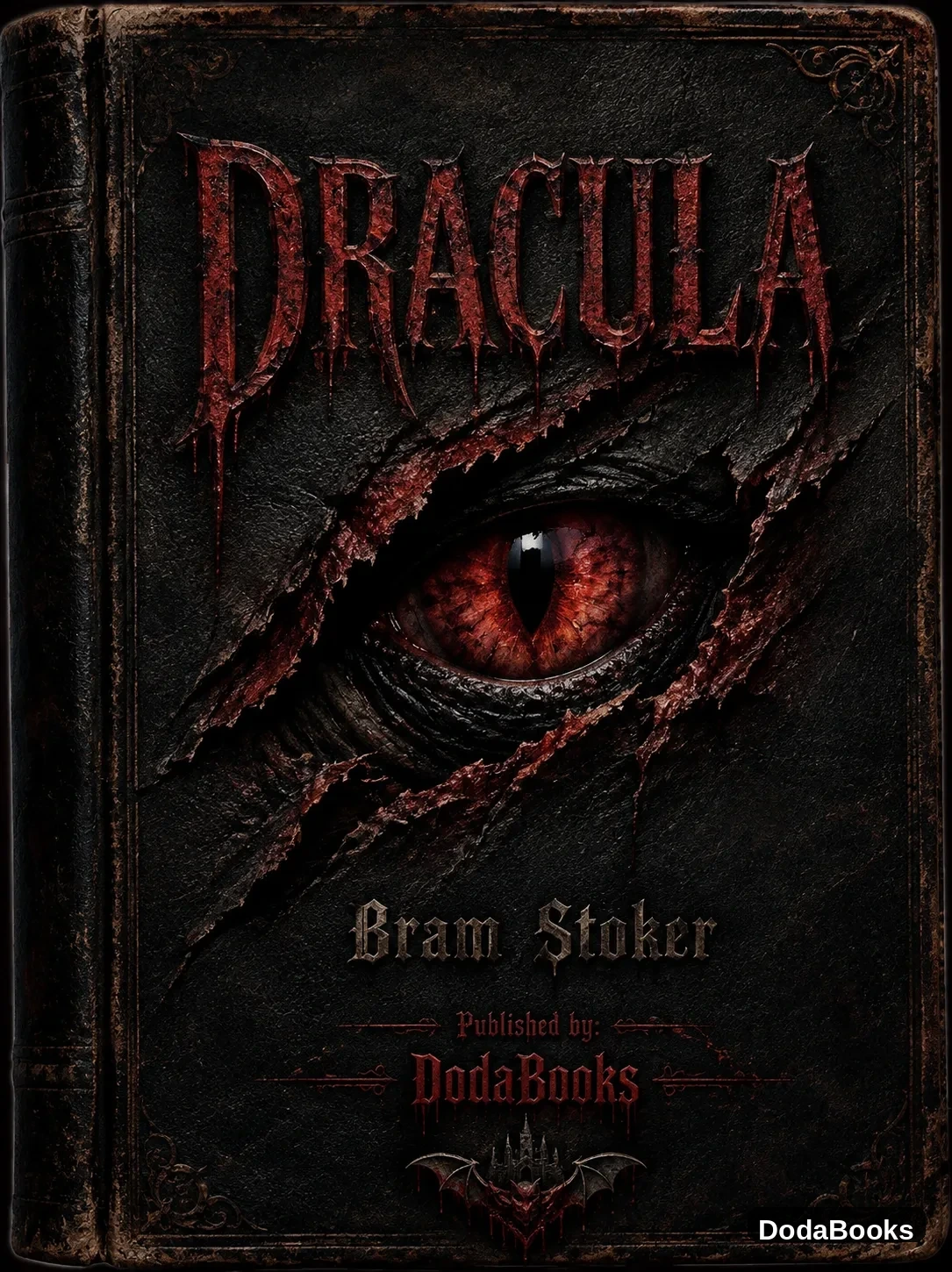
For literature teachers, gothic fiction lovers, and university students seeking the authoritative unabridged text with comprehensive character profiles, historical annotations on Victorian criminology, and medical context, we recommend the definitive edition from DodaBooks:
Dracula: Complete Annotated Edition
Discover Bram Stoker’s immortal masterpiece in a magnificent scholarly edition. Featuring the complete unabridged 27-chapter novel text, exhaustive character analyses of the Crew of Light, historical annotations on late-Victorian technology, Transylvanian geography, and imperial reverse-colonization essays.
- Complete, authoritative unabridged 27-chapter novel text
- Comprehensive character breakdowns and historical notes on Victorian criminology
- Exquisite custom 3D typography and digital formatting optimized for modern e-readers
- Instant EPUB download compatible with Kindle, Apple Books, and Kobo
Frequently Asked Questions
Why does Count Dracula target Mina Harker after Lucy Westenra?
Dracula targets Mina Harker as an act of deliberate military and psychological retaliation. After Van Helsing and the men successfully track and sterilize Dracula’s hidden soil boxes across London, Dracula realizes that the Crew of Light is closing in on him. He infiltrates the asylum to destroy the group’s emotional and intellectual center: “You would play your brains against mine! You would help these men to hunt me and frustrate me in my designs! Now you shall be their terror!” By turning Mina into his vampiric concubine, Dracula aims to punish the men and break their collective will.
How does Jonathan Harker’s character reflect Victorian anxieties about male nervous breakdown?
In Victorian England, men were expected to project absolute emotional self-control, physical courage, and rational mastery. Jonathan Harker’s profound psychological collapse following his imprisonment in Castle Dracula—suffering from what nineteenth-century physicians diagnosed as “hysteria” or “brain fever”—represented a terrifying subversion of bourgeois masculinity. His emasculation by the predatory female vampires and his inability to trust his own senses exposed the fragile vulnerability of modern civilized man when confronted with primal terror.
What is the symbolic meaning of Quincey Morris’s death in the final scene?
Quincey Morris’s death symbolizes the sacrificial cost of defending Western civilization against ancient evil. As an American, Quincey represents the frontier vitality and unpretentious chivalry of the New World. By delivering the fatal bowie-knife strike to Dracula’s heart and dying from wounds inflicted by the Szgany guards, Quincey sanctifies the victory with innocent blood. In the novel’s final lines, Jonathan and Mina name their son Quincey, ensuring that his heroic spirit and sacrifice are memorialized in the next generation.
Explore Related Literature Masterworks
Continue your exploration of classic world literature and gothic character dynamics with our companion analyses:
- Dracula Study Guide: Summary, Characters & Themes: The foundational comprehensive study guide to Bram Stoker’s vampire masterpiece.
- Dracula Themes & Symbolism: Analysis of Key Motifs: Deconstruct reverse colonization, blood currencies, and technological forensics.
- Frankenstein Characters: Analysis of Victor & Monster: Examine Mary Shelley’s psychological breakdown of Victor, Walton, and the Creature.
- The Hound of the Baskervilles Study Guide: Summary & Analysis: Deconstruct Arthur Conan Doyle’s forensic duel between Sherlock Holmes and the Dartmoor hound.