Pride and Prejudice Characters: Analysis of Elizabeth, Darcy & Wickham
Jane Austen’s Pride and Prejudice (1813) endures not merely because of its romantic symmetry, but because of its extraordinarily nuanced psychological characterizations. Austen moves beyond the flat caricatures of eighteenth-century sentimental fiction to create characters whose moral virtues and cognitive blind spots are inextricably linked.
In Austen’s moral universe, character is neither fixed nor infallible. It is constantly tested, scrutinized, and revised through social dialogue, epistolary evidence, and moral self-reflection. This guide provides literature scholars, educators, and university students with an exhaustive analysis of the primary cast of Pride and Prejudice.
For comprehensive plot outlines, economic contexts, and chapter recaps, consult our primary Pride and Prejudice Study Guide, as well as our analytical breakdown of Pride and Prejudice Themes & Symbolism.
The Character Spectrum of Pride and Prejudice
Austen arranges her characters along a spectrum measuring the balance between individual self-knowledge, social duty, and financial prudence:
| Character | Social Status & Income | Dominant Psychological Trait | Core Moral Flaw | Ultimate Character Arc |
|---|---|---|---|---|
| Elizabeth Bennet | Landed Gentry (£40/year inheritance) | Sparkling wit, intellectual independence | Vanity in her own discernment (Prejudice) | Achieves profound self-knowledge and an equal marriage with Darcy |
| Fitzwilliam Darcy | Aristocratic Landowner (£10,000/year Pemberley) | Uncompromising integrity, social responsibility | Class condescension and aloofness (Pride) | Learns emotional humility and uses his wealth for anonymous rescue |
| George Wickham | Son of Darcy’s steward; Militia Lieutenant | Superficial charm, effortless sociability | Parasitic greed and moral nihilism | Trapped in an impoverished, loveless marriage subsidized by Darcy |
| Jane Bennet | Eldest Bennet daughter (£40/year inheritance) | Pure benevolence, charitable candor | Inability to perceive malice or deceit in others | Rewarded with marital happiness alongside the equally amiable Bingley |
| Charles Bingley | Wealthy gentry heir (£4,000–£5,000/year trade fortune) | Affable generosity, easygoing sociability | Extreme pliability and lack of self-confidence | Overcomes self-doubt to marry Jane with Darcy’s renewed blessing |
| Mr. William Collins | Clergyman (£200+ Hunsford living; Longbourn heir) | Grotesque obsequiousness, pompous pedantry | Complete absence of self-respect and genuine empathy | Settles into a neutral, managed domestic routine with Charlotte Lucas |
| Charlotte Lucas | Provincial Gentry (No fortune, 27 years old) | Utilitarian pragmatism, acute social awareness | Willingness to compromise romantic emotional fulfillment | Establishes a comfortable, autonomous household at Hunsford |
| Mr. Bennet | Country Gentleman (£2,000/year Longbourn estate) | Detached intellectual wit, cynical humor | Paternal indolence and criminal abdication of duty | Experiences painful remorse after Lydia’s elopement before retreating |
| Mrs. Bennet | Daughter of a Meryton attorney (£4,000 merchant capital) | Hysterical maternal anxiety, mercenary ambition | Absolute vulgarity, lack of discretion and tact | Vindicated in having three daughters married, yet fundamentally unchanged |
| Lady Catherine de Bourgh | Aristocratic Matriarch (Rosings Park estate) | Imperious authoritarianism, feudal entitlement | Delusion that wealth grants absolute authority over others | Humiliated by Elizabeth’s defiance; reluctantly reconciles with Darcy |
Elizabeth Bennet: The Perils of Intellectual Vanity
Elizabeth Bennet stands as one of the most celebrated protagonists in world literature. She is intelligent, lively, and possessed of a playful irreverence that rejects the servile decorum expected of Regency women. Unlike her sister Jane, who seeks excuses for everyone’s bad behavior, Elizabeth takes keen pleasure in dissecting the absurdities of her neighbors:
“I hope I never ridicule what is wise or good. Follies and nonsense, whims and inconsistencies, do divert me, I own, and I laugh at them whenever I can.”
However, Austen reveals that Elizabeth’s wit is a double-edged sword. Her pride lies precisely in her belief that she is an infallible judge of character. When Darcy mortifies her pride at the Meryton Assembly by refusing to dance with her, Elizabeth does not merely feel hurt; she resolves to construct a complete moral indictment against him:
- The Blindness of Confirmation Bias: Once Elizabeth decides Darcy is proud and disagreeable, she uncritically accepts George Wickham’s fabricated sob story in Chapter 16. Because Wickham is handsome, polite, and flatters her intelligence, Elizabeth equates pleasant manners with moral virtue.
- The Humiliation of Chapter 36: The structural climax of Elizabeth’s internal development occurs when she reads Darcy’s letter at Hunsford. Forced to confront documentary evidence of Wickham’s perfidy and Darcy’s legitimate protective motives toward his sister Georgiana, Elizabeth experiences a devastating collapse of self-esteem:
“How despicably have I acted!” she cried; “I, who have prided myself on my discernment!… Pleased with the preference of one, and offended by the neglect of the other, on the very beginning of our acquaintance, I have courted prepossession and ignorance, and driven reason away… Till this moment I never knew myself.”
- The Transformation into Maturity: Elizabeth does not stop being witty or spirited after this revelation; rather, her wit is tempered by intellectual humility. She learns that true discernment requires examining one’s own motives before passing judgment on others.
Fitzwilliam Darcy: Nobility, Pride, and Moral Reformation
If Elizabeth’s fault is hasty prejudice, Fitzwilliam Darcy’s flaw is entrenched aristocratic pride. As the master of Pemberley, Darcy commands an annual income of £10,000, possesses extensive political influence, and oversees hundreds of tenant families. He has been educated to be just, honorable, and charitable, but also to look down upon those outside his elite circle:
“I have been a selfish being all my life, in practice, though not in principle. As a child I was taught what was right, but I was not taught to correct my temper. I was given good principles, but left to follow them in pride and conceit.”
The Duality of Darcy’s Pride
Austen distinguishes carefully between vicious arrogance and legitimate aristocratic dignity:
- Darcy’s Negative Pride: In London and Hertfordshire society, Darcy adopts a cold, defensive aloofness. At the Meryton ball, he treats local families as vulgar provincials beneath his notice. When he first proposes to Elizabeth in Chapter 34, he insults her family, her connections, and her social status even as he professes his ardent love, expecting her to be overcome with gratitude.
- Darcy’s Positive Pride: At Pemberley, Darcy’s pride manifests as noble stewardship. His longtime housekeeper, Mrs. Reynolds, provides the decisive testimony in Chapter 43: Darcy is the kindest landlord, the most generous master, and the most devoted brother she has ever known. His pride prevents him from engaging in petty vices, debts, or dishonesty.
Elizabeth’s fiery rejection at Hunsford strikes the essential blow against Darcy’s vanity. When she accuses him of not behaving like a “gentleman,” Darcy is forced into painful self-examination. His subsequent actions—rescuing the Bennet family from absolute ruin by tracking down Wickham in London, paying his debts, and demanding complete anonymity—demonstrate that his love for Elizabeth has transformed his aristocratic arrogance into genuine, self-effacing nobility.
George Wickham: The Sociopathy of Charming Manners
George Wickham functions as the dark underside of Regency charm. As the son of the late Mr. Darcy’s respected steward, Wickham was raised alongside Darcy, educated at Cambridge, and granted generous patronage. Yet Wickham possesses an entirely parasitic character:
Striking physical appearance, melodious voice, and performative manners that disarm polite society.
Chronic gambling debts, broken contracts, and an absence of financial or personal accountability.
Attempted seduction and elopement with 15-year-old Georgiana Darcy to secure her £30,000 inheritance.
Eloping with 16-year-old Lydia without intent to marry, blackmailing the family until Darcy buys his compliance.
Wickham represents the fatal flaw of relying on external appearances. While Darcy is socially awkward, stiff, and honest, Wickham is fluid, performative, and thoroughly corrupt:
- The Exploitation of Sympathy: Wickham violates gentlemanly code in Chapter 16 by airing private grievances to Elizabeth within hours of meeting her, weaponizing victimhood to gain social standing.
- The Financial Extortion: Wickham abandons the church living bequeathed by Darcy’s father, demands a £1,000 cash buyout to study law, squanders the money in months, and returns demanding the church living back.
- The Elopement as Hostage Taking: When Wickham runs away with Lydia Bennet from Brighton, he has zero intention of marrying her; she has no money. He abandons her in London boarding houses until Darcy tracks him down and buys his compliance with thousands of pounds.
Austen uses Wickham to warn readers that charm without moral principle is a predatory weapon. In his final appearance, married to Lydia, Wickham is entirely shameless, ready to live forever on handouts from Elizabeth and Darcy.
Mr. Collins and Charlotte Lucas: Two Faces of Practical Survival
The relationship between Mr. Collins and Charlotte Lucas represents Austen’s brilliant exploration of economic pragmatism versus absurd delusion.
Mr. Collins: The Grotesque Sycophant
William Collins is Austen’s greatest comic creation, yet his foolishness carries serious legal power: he holds the entail to Longbourn that will disinherit the Bennet sisters. Collins’s psychology is defined by two traits:
- Servile Deference to Power: Collins worships Lady Catherine de Bourgh with religious fervor, citing her opinions on closet shelves and carriage windows as divine wisdom.
- Pompous Self-Importance: Because he is a clergyman and heir to an estate, Collins believes himself an irresistible catch. His proposal to Elizabeth in Chapter 19 is a business transaction structured around three self-centered points: his patroness told him to marry, it will add to his happiness, and he is doing the family a favor by taking a daughter without fortune.
Charlotte Lucas: Clear-Eyed Realism
When Charlotte accepts Collins forty-eight hours after Elizabeth’s refusal, Elizabeth is horrified. Yet Austen treats Charlotte with immense sympathy. Charlotte explains her philosophy with clinical detachment:
“I am not romantic, you know; I never was. I ask only a comfortable home; and considering Mr. Collins’s character, connections, and situation in life, I am convinced that my chance of happiness with him is as fair as most people can boast on entering the marriage state.”
At twenty-seven, Charlotte has no beauty and no dowry. If she remains unmarried, she will become a permanent domestic burden to her brothers. By marrying Collins, she secures Hunsford Parsonage, her own sitting room, and legal rights to Longbourn upon Mr. Bennet’s death. When Elizabeth visits Hunsford in Chapter 28, she observes that Charlotte manages her household brilliantly: encouraging Collins to spend his time gardening and working in his parish to minimize his presence in her parlor.
Recommended Critical Editions
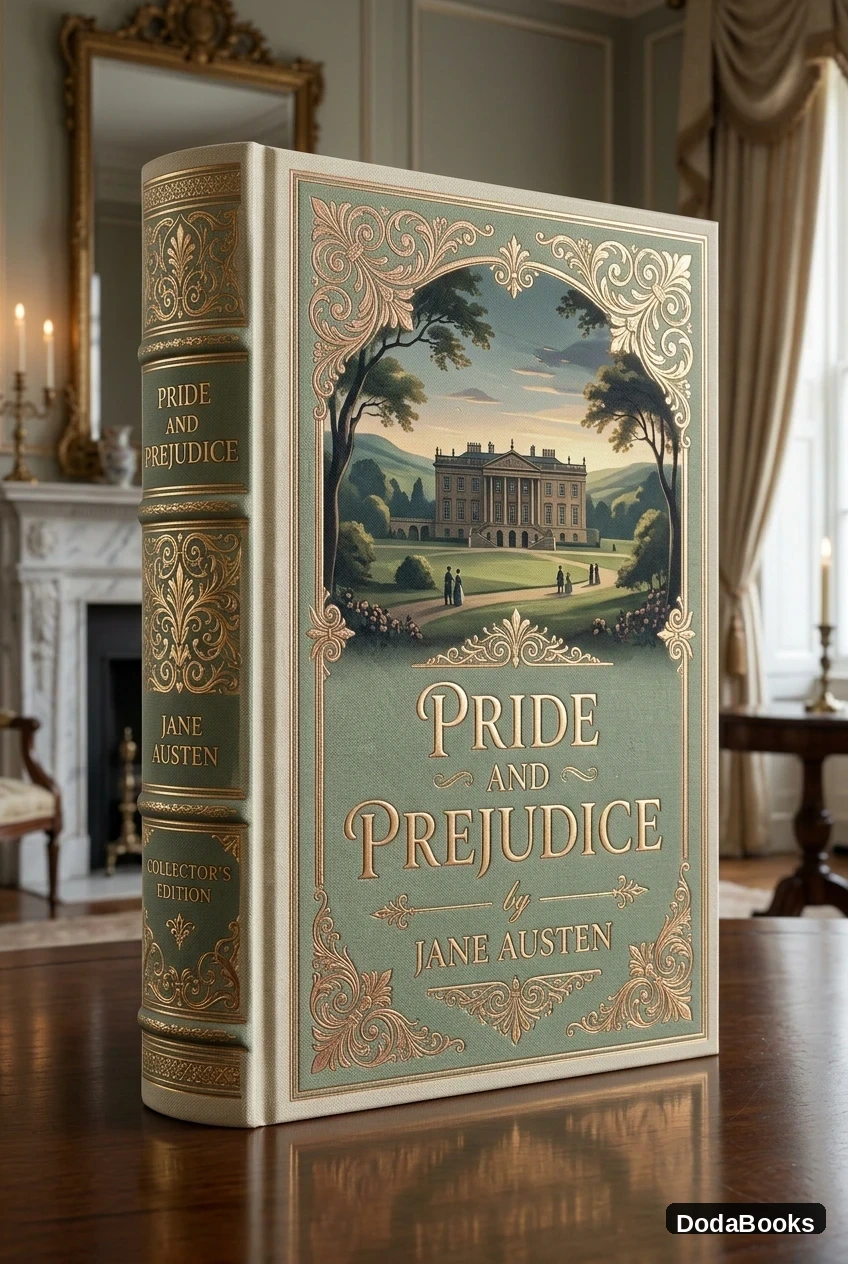
Pride and Prejudice: Annotated Reader's Edition
The complete unabridged 1813 classic formatted with clean typography and active navigation. Features 240+ scholarly annotations detailing Regency currency conversions, entail law, carriage travel times, and textual variants.
- ✓ Complete Unabridged 1813 Text
- ✓ 240+ Regency Currency & Legal Footnotes
- ✓ Active Interactive Table of Contents
- ✓ DRM-Free Instant EPUB & PDF Download
Related Literature Study Guides
Explore our comprehensive library of literary masterwork analyses:
- Pride and Prejudice Study Guide: The core study guide covering fast facts, plot summary, entail law, and marriage matrices.
- Pride and Prejudice Themes & Symbolism: An analysis of entailment law, the marriage market, and Pemberley’s architecture.
- Moby-Dick Characters Analysis: Detailed psychological profiles of Ahab, Ishmael, Queequeg, Starbuck, and Pip.
- The Pequod in Moby-Dick: Ship Meaning & Symbolism: The barbaric architecture and 30-man union microcosm of Melville’s whaleship.
- The Great Gatsby Study Guide: Spatial class division and modernist disillusionment in Fitzgerald’s masterwork.
- Frankenstein Study Guide: The Vitalism controversy, Romantic science, and paternal responsibility in Mary Shelley.
- Crime and Punishment Study Guide: Russian nihilism, utilitarian rationalism, and spiritual resurrection in Dostoevsky.
Frequently Asked Questions
How does Elizabeth Bennet’s character evolve throughout the novel?
Elizabeth begins with supreme confidence in her own psychological discernment and wit. Her turning point occurs in Chapter 36 upon reading Darcy’s letter, where she realizes her vanity blinded her to Wickham’s predatory deceit and led her to misjudge Darcy’s integrity. Her arc represents a shift from reactive prejudice to mature self-knowledge and moral humility.
What is Fitzwilliam Darcy’s central flaw in Pride and Prejudice?
Darcy’s central flaw is his class arrogance and aristocratic aloofness. Accustomed to the deference of high society, he treats provincial society with disdain and assumes Elizabeth will eagerly accept his proposal despite his insults to her family. Through Elizabeth’s rebuke, Darcy learns that true gentlemanhood requires humility, compassion, and emotional openness.
How does Mr. Collins function as a satirical foil to Mr. Darcy?
Mr. Collins represents the servile, performative social climber who mistakes sycophancy toward Lady Catherine for moral virtue. While Darcy’s pride is grounded in genuine aristocratic duty and private integrity, Collins possesses no authentic self-respect, deriving his entire identity from absurd obsequiousness to wealth and title.