Dracula Themes & Symbolism: Analysis of Key Motifs
When Bram Stoker published Dracula in 1897, the Victorian era stood perched between the triumphant industrial achievements of the nineteenth century and the shadowy anxieties of an uncertain modern dawn. Beneath the gilded surface of Queen Victoria’s Diamond Jubilee, British society grappled with acute psychological tensions: the fear of biological degeneration, the erosion of strict sexual boundaries, imperial decay, and the limits of scientific materialism.
While our foundational Dracula Study Guide outlines the narrative architecture and character dynamics of Stoker’s masterpiece, this companion study examines the deep thematic arteries and symbolic motifs that have made the Transylvanian count an immortal archetype in Western culture.
Fast Facts: Masterwork Thematic Profile
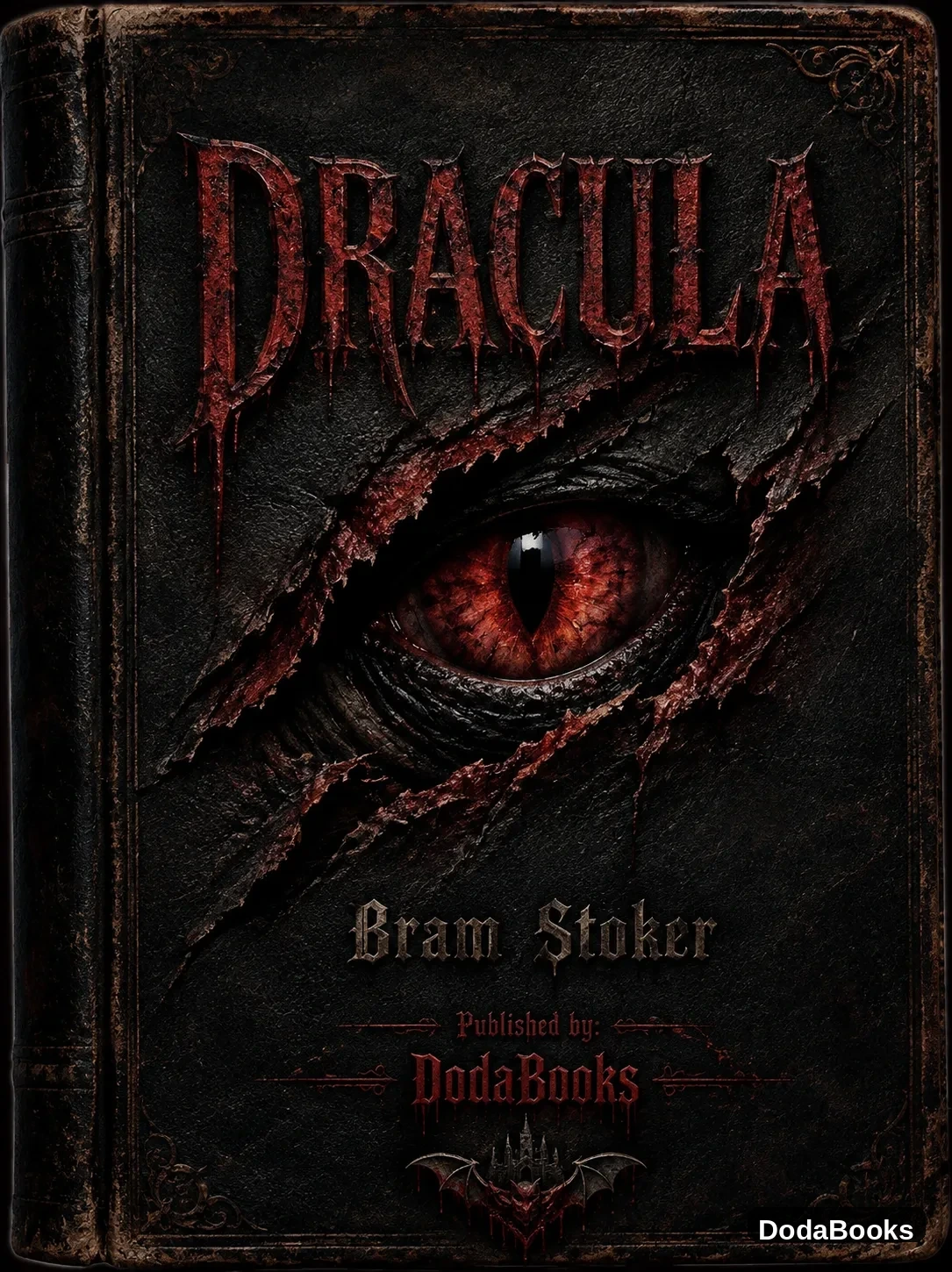
| Critical Dimension | Thematic Function in Dracula |
|---|---|
| Primary Motif | Blood: Vitality, hereditary purity, erotic communion, and biological contagion. |
| Socio-Political Theme | Reverse Colonization: Imperial retribution from Europe’s archaic margins. |
| Philosophical Conflict | Empirical Science vs. Sacramental Faith: The limits of secular rationalism. |
| Gender Paradox | The New Woman vs. Victorian Angel: Autonomy, domesticity, and sexual dread. |
| Structural Device | Epistolary Polyphony: Shorthand transcripts, wax phonographs, and legal affidavits. |
| Companion Analysis | Dracula Study Guide • Frankenstein Themes |
1. Blood as Currency, Contagion, and Sacred Parody
Blood is the inescapable physiological and metaphysical obsession of Dracula. In Chapter 18, the lunatic Renfield recites Leviticus 17:11 to Dr. John Seward: “The blood is the life!” This biblical declaration serves as the thematic fulcrum of the entire novel.
Yet Stoker does not treat blood merely as physical nourishment. Within late-Victorian cultural discourse, blood served as a complex metaphor for aristocratic breeding, racial purity, sexual passion, and infectious disease:
The Medicalized Vampire: Syphilis and Degeneration
During the 1890s, Britain was gripped by the public health crisis of venereal syphilis, a disease that entered the bloodstream invisibly, remained dormant for years, and eventually led to physical degeneration, madness, and agonizing death. Furthermore, Max Nordau’s best-selling 1892 treatise Degeneration argued that modern European civilization was biologically exhausting itself through urban decadence and moral fatigue.
Stoker’s vampire operates as the exact physical personification of this pathological terror:
- Invisible Transmission: The puncture marks on the throat are so tiny they are initially misdiagnosed by Dr. Seward as accidental pinpricks or nervous anemia.
- Hereditary Taint: Once bitten, the victim’s physical fluids undergo a molecular corruption that cannot be cleansed by conventional pharmacology.
- Moral Putrefaction: The physical disease rapidly triggers moral disintegration, transforming the sweet, gentle Lucy Westenra into a predatory ghoul who preys upon defenseless London children.
Like the Creature in Mary Shelley’s Frankenstein, who embodies the psychological anxieties of artificial biological engineering, Stoker’s vampire crystallizes the biological dread of bodily contagion invading the sanctity of the English parlor.
2. Reverse Colonization: The Empire under Siege
In his seminal 1990 essay The Occidental Tourist: Dracula and the Anxiety of Reverse Colonization, literary scholar Stephen Arata observed that Dracula captures a profound crisis in British imperial self-confidence.
Throughout the eighteenth and nineteenth centuries, Britain had conquered, mapped, and economically exploited overseas territories across Asia, Africa, and the Americas. By the late 1890s, however, British geopolitical dominance was being challenged by rising powers such as Germany and the United States, sparking a cultural paranoia that the mother country had grown soft, sedentary, and vulnerable to invasion from the very margins it had sought to dominate.
The Strategy of Count Dracula’s London Campaign
Count Dracula does not arrive in London as a savage brute armed with crude weapons. Instead, he meticulously adopts the administrative tools of British imperialism to conquer London from within:
| Analytic Category | Dracula’s Tactical Infiltration | Late-Victorian Imperial Paranoia |
|---|---|---|
| Linguistic Assimilation | Masters fluent English idiom, British common law, and municipal cartography. | The colonized subject mastering the colonizer’s language to subvert imperial institutions. |
| Real Estate Acquisition | Purchases Carfax in Purfleet, plus houses in Piccadilly, Mile End, and Bermondsey. | Foreign syndicates buying strategic metropolitan land and penetrating suburban strongholds. |
| Logistical Precision | Coordinates schooner charters, railway schedules, and moving vans. | Modern commercial transportation networks used to deliver hostile biological threats. |
| Metropolitan Dispersion | Distributes 50 earth-boxes across London to establish hidden military sanctuaries. | Sleeper cells of archaic adversaries embedded within the heart of the civilized empire. |
Count Dracula proudly boasts to Jonathan Harker in Chapter 3 of his ancestral conquests against the Turks, reminding the young solicitor that the blood of Attila the Hun runs in his veins. By transplanting himself to London, Dracula treats Britain exactly as Britain treated foreign colonies: as an abundant territory ripe for exploitation, settlement, and resource extraction—where the natural resource being harvested is human blood.
This geopolitical subversion links Dracula directly to other late-Victorian works examining moral rot and cultural duplicity, such as The Picture of Dorian Gray.
3. Technology vs. Folklore: The Epistemological War
A foundational tension animating Dracula is the clash between modern Western rationalism and ancient Eastern European folklore.
At the beginning of the novel, Jonathan Harker proudly embodies Victorian technological self-confidence. Traveling eastward through Munich and Budapest, he notes train departure times down to the minute, records his observations in shorthand, and relies on Baedeker guidebooks. When Transylvanian peasants plead with him to wear a crucifix on St. George’s Eve, Harker dismisses them with haughty condescension:
“As an English Churchman, I have been taught to regard such things as in some measure idolatrous, and yet it seemed so ungracious to refuse an old lady seeming so in earnest.”
Harker’s scientific hubris is swiftly shattered within the walls of Castle Dracula, where Newtonian physics, imperial legal contracts, and train timetables prove completely useless against a supernatural being who can scale castle walls head-downward like a lizard, control the weather, and dissolve into moonlight.
Van Helsing’s Syncretic Exorcism Pipeline
To defeat Dracula, the Western protagonists cannot rely exclusively on scientific gadgets or primitive superstitions. Instead, Professor Abraham Van Helsing engineers an unprecedented syncretic methodology that unites modern forensic medicine with ancient Catholic sacramentalism:
Stoker’s resolution carries a profound philosophical message: modern secular technology without spiritual faith is blind and impotent, just as medieval superstition without rigorous forensic method is disorganized and ineffective. Only when science and faith unite can civilization withstand the ancient monstrosities of human evil.
4. The New Woman and Eroticized Atavism
Written during the height of the fin-de-siècle debates regarding the New Woman—the emerging movement of women demanding higher education, professional careers, financial independence, and reproductive autonomy—Dracula is saturated with masculine anxiety concerning female sexual agency.
Stoker crafts a deliberate structural contrast between the two central female characters, establishing a moral binary that reflects Victorian patriarchal ideology:
Lucy Westenra: The Punished Coquette
Lucy begins as the romantic ideal of Victorian gentility: wealthy, beautiful, and emotionally fragile. Yet Stoker early on exposes her suppressed yearning for sexual multiplicity. In Chapter 5, Lucy laments to Mina:
“Why can’t they let a girl marry three men, or as many as want her, and save all this trouble?”
This suppressed desire renders Lucy spiritually receptive to Dracula’s nocturnal advances. As Dracula drinks her blood, her vampiric transformation liberates an aggressive, uninhibited sexuality that horrifies her male protectors:
- Physical Mutation: Her sweet, demure face becomes hard and voluptuous; her crimson lips pull back in a predatory snarl.
- Subversion of Motherhood: In the Hampstead cemetery, Lucy becomes the “Bloofer Lady,” abducting young children to feed upon their throats—the ultimate desecration of Victorian maternal nurturing.
- The Ritual Staking: In Chapter 16, Arthur Holmwood, Dr. Seward, Quincey Morris, and Van Helsing corner Lucy in her tomb. Arthur drives an ash stake through her heart in a scene laden with violent sexual subtext, an act framed by Stoker not as murder, but as a merciful surgical restoration of female purity that returns Lucy to angelic, inert tranquility.
Mina Harker: The Sanctified Intellectual Partner
In contrast to Lucy’s tragic fate, Mina Harker represents the ideal reconciliation of modern female intellect with traditional domestic duty.
Mina studies shorthand, memorizes the entire British railway timetable, and typescripts the polyphonic diary entries that allow the men to track the Count across Europe. Van Helsing praises her repeatedly, famously asserting: “She has a man’s brain… and a woman’s heart.”
Even when Dracula invades her bedroom and forces her to drink his blood, Mina does not succumb to moral rot. Instead, she turns her psychic link with the Count into an invaluable military asset, allowing Van Helsing to hypnotize her at sunrise and sunset to locate Dracula’s ship on the Black Sea. Her intellect and spiritual fortitude make her the ultimate architect of Dracula’s annihilation.
5. Epistolary Form as Forensic Dossier
Unlike conventional third-person Victorian novels, Dracula contains no unified authorial narrator. The story is told through an intricate mosaic of first-person texts:
- Private journals kept in phonographic wax cylinders and shorthand.
- Telegraph dispatches transmitted over modern electrical cables.
- Newspaper clippings from the Dailygraph and shipping gazettes.
- Doctor’s clinical case notes recorded at the Purfleet lunatic asylum.
- Official cargo manifests and legal correspondence between solicitors.
Why Stoker Chose the Polyphonic Collage
This documentary methodology serves critical thematic purposes:
- Forensic Realism: By presenting the story as a legal dossier assembled by Mina Harker, Stoker forces the reader into the role of a juror evaluating empirical evidence. The supernatural terror feels terrifyingly plausible because it is documented through bureaucratic instruments.
- Epistemological Fragmentation: No single character possesses a comprehensive view of the monster. Harker knows Castle Dracula; Dr. Seward knows Renfield’s delusions; Arthur Holmwood knows Lucy’s symptoms. The protagonists can only defeat Dracula by pooling their individual perspectives into a collective database.
- Symbolic Triumph of the Archive: Dracula represents ancient feudal secrecy and oral folklore. The British fellowship defeats him by transcribing his movements into typed text, cataloging his properties, and weaponizing information bureaucracy against supernatural shadow.
Recommended Critical Edition
For readers, scholars, and collectors seeking an authoritative text with pristine typography, historical annotations, and comprehensive critical commentary, we highly recommend the standalone digital edition from DodaBooks:
Dracula (Masterwork Edition)
Experience Bram Stoker's gothic masterpiece in its purest form. Featuring complete unabridged epistolary journal entries, rich contextual annotations on Victorian imperial anxiety and medicine, and a flawless digital layout optimized for Kindle, tablets, and smartphones.
- Complete, authoritative 1897 text with zero omissions
- Scholarly annotations covering reverse colonization, folklore, and medical history
- High-resolution custom 3D typography and digital formatting
- Instant cross-platform EPUB download for all e-readers
Frequently Asked Questions
What does the recurring motif of the crucifix represent in Dracula?
The crucifix represents the inviolable authority of traditional Christian sacrament against predatory demonic forces. While modern characters like Jonathan Harker initially discard the crucifix as medieval Catholic superstition, they discover that sacred objects act as physical and metaphysical barriers that repulse the un-dead, highlighting the novel’s insistence that empirical modernity must harmonize with spiritual faith to endure.
How does Renfield’s zoophagous madness parallel Count Dracula’s vampirism?
R.M. Renfield, the institutionalized madman under Dr. Seward’s care, acts as Dracula’s psychic harbinger and grotesque parody. Renfield consumes flies, spiders, and sparrows in an obsessive attempt to absorb their life forces, mirroring Dracula’s grander predation upon human bloodlines. His madness exposes the dark, self-destructive logic of parasitic consumption that defines the vampire himself.
Why does Dracula fear the garlic flower and wild rose?
In European folklore, garlic (Allium sativum) and wild rose stakes possess natural antimicrobial and apotropaic properties believed to ward off disease and malevolent spirits. Within Stoker’s novel, these natural botanical defenses symbolize the uncorrupted earth resisting demonic unnaturalness, grounding the battle between good and evil in the elemental forces of the natural world.
Explore Related Literature Masterworks
Continue your exploration of classic world literature and gothic studies with our companion analyses:
- Dracula Study Guide: Summary, Characters & Analysis: The foundational companion guide covering full chapter breakdowns, character profiles, and critical reception.
- Frankenstein Themes & Symbolism: Explore Mary Shelley’s classic exploration of the Modern Prometheus, scientific hubris, and social alienation.
- The Picture of Dorian Gray Study Guide: Dive into Oscar Wilde’s searing critique of late-Victorian aestheticism, double lives, and moral decomposition.
- Crime and Punishment Themes & Symbolism: Discover Dostoevsky’s exploration of guilt, redemption, and the psychological torment of the extraordinary man.