Crime and Punishment Themes & Symbolism: Analysis of Motifs
Fyodor Dostoevsky’s Crime and Punishment (1866) is not a conventional whodunit, but an unsparing autopsy of the human soul under the pressure of radical intellectual pride. Through a tightly woven network of psychological motifs, theological archetypes, and urban realism, Dostoevsky dramatizes the battle between Western rational egoism and Eastern Orthodox spiritual redemption.
To fully grasp the psychological depth of the novel, one must examine its core thematic structures alongside the recurring physical symbols that mirror Rodion Raskolnikov’s fractured consciousness.
Major Themes
1. The “Extraordinary Man” Theory and the Transgression Paradox
The intellectual engine driving the entire narrative is Raskolnikov’s thesis published in the journal Periodical Discourse, titled “On Crime.” Influenced by contemporary European thinkers like Jeremy Bentham, John Stuart Mill, and the utopian socialist movement of the Russian 1860s, Raskolnikov categorizes humanity into two distinct biological castes:
- The Ordinary (The Material): The overwhelming majority of conservative, obedient people who reproduce their kind, conform to statutory laws, and preserve the current social order.
- The Extraordinary (The Great Men): Exceptional individuals—exemplified by Lycurgus, Solon, Mahomet, and Napoleon Bonaparte—who inherently possess the right to transgress statutory laws and spill blood if doing so serves the realization of their revolutionary ideas for human progress.
The fatal flaw of Raskolnikov’s system is its inverted epistemology. He does not commit murder out of altruistic utilitarian calculation to feed starving orphans with pawnbroker Alyona Ivanovna’s gold; rather, he murders to answer an agonizing personal existential question: “Am I a trembling creature, or have I the right?”
By collapsing into delirious fever and paralyzing paranoia the moment the murder is executed, Raskolnikov proves empirically that he is not an extraordinary Napoleon. Dostoevsky demonstrates that human moral law is not a social construct invented by ordinary people to restrain the strong; it is an innate, ontological dimension of human nature. When Raskolnikov kills Alyona, he does not elevate himself to godhood; he severs his ontological connection to humanity. As he confesses to Sonya: “Did I murder the old woman? I murdered myself, not her!”
2. The Psychology of Guilt and Suffering as Inevitable Expiation
In Dostoevsky’s theological universe, suffering (stradanie) is not merely a negative emotional consequence of crime; it is the vital, purifying crucible through which the divided soul is reunited with God and community.
Raskolnikov’s torment begins well before legal authority suspects him. The state’s legal penal apparatus, embodied in the Siberian prison camp, is completely secondary to the internal psychological tribunal of conscience:
- Physiological Somatization: Raskolnikov’s guilt manifests immediately as physical pathology—hallucinations, brain fever, sweating seizures, insomnia, and speech apraxia.
- Social Alienation: The murderer is incapable of looking his mother, Pulcheria Alexandrovna, or his sister, Dunya, in the eyes. Love from the innocent feels to him like burning sulfur because it assumes a shared moral ground that his crime has destroyed.
- The Russian Concept of Orthodoxy: Peasants throughout the novel refer to criminals as neschastnye (“the unfortunate ones”). Criminals are viewed not with vindictive malice, but with pity, because their crime has severed them from divine harmony. Only by willingly embracing the cross of suffering can the criminal pay their debt to the spiritual ecosystem.
3. The Divided Soul: Polyphony and Raskolnikov’s Psychological Doubles
Dostoevsky constructs Raskolnikov’s psyche as an unstable battlefield of opposing impulses. The protagonist’s very name is derived from raskol, the Russian word for “schism” or “split.”
To externalize this internal warfare, Dostoevsky employs character doubles (doppelgängers) who embody extreme manifestations of Raskolnikov’s split personality:
Amoral sensualist who has truly "stepped over" all moral boundaries. Haunted by ghostly apparitions of ruined victims, his spiritual void ends in rainy suicide.
Torn violently between arrogant Napoleonic rationalism and profound instinctive empathy. Only genuine suffering and grace can bridge his psychological split.
Radical Christian humility. Forced into prostitution to feed starving children, she remains spiritually pure, bearing the cypress cross and guiding Rodion to rebirth.
- Arkady Ivanovich Svidrigailov: The demonic double. Svidrigailov has genuinely realized Raskolnikov’s theory: he acknowledges no moral boundaries, has indulged in suspected murders and sexual exploitation of minors, and lives solely for sensual gratification. Yet far from finding Napoleonic glory, Svidrigailov inhabits a horrifying existential void where eternity is imagined as “a little room, something like a village bathhouse, grimy, and spiders in every corner.” His suicide in the rainy dawn proves that absolute autonomy without moral truth ends in self-annihilation.
- Pyotr Petrovich Luzhin: The bourgeois utilitarian double. Luzhin represents the shallow, hypocritical vulgarization of Western utilitarianism. He preaches that one should love oneself first because economic self-interest drives societal wealth. Luzhin’s desire to marry an impoverished girl (Dunya) solely to keep her in perpetual gratitude parallels Raskolnikov’s cold exploitation of others for self-aggrandizement.
- Dmitri Razumikhin: The healthy, integrated foil. Razumikhin (from razum, meaning “reason” or “good sense”) shares Raskolnikov’s poverty and student background, yet remains mentally vigorous, generous, and connected to community. He demonstrates that intellectual pursuit does not require alienation from human sympathy.
- Sonya Marmeladova: The spiritual savior. Sonya embodies radical Christian humility and self-sacrifice. Forced into prostitution to feed her starving step-siblings, Sonya is physically defiled by the world yet spiritually immaculate. She becomes the mirror in which Raskolnikov’s intellectual pride collapses into tears of repentance.
Symbolic Architecture & Recurring Motifs
Dostoevsky’s mastery lies in his ability to make every physical detail of the St. Petersburg environment vibrate with psychological and theological resonance.
1. St. Petersburg as a Hallucinatory Mental Landscape
Rather than the grand neoclassical capital of Peter the Great, Dostoevsky depicts the sordid slums surrounding the Haymarket Square (Sennaya Ploshchad). The city is not merely a setting; it is an active co-conspirator in Raskolnikov’s madness:
- Atmospheric Suffocation: The novel takes place during an oppressive July heatwave. The air is heavy with dust, lime, burning asphalt, and the stench of cheap taverns (kabaks). This suffocating climate acts as an incubator for diseased ideas:
“The heat in the street was terrible: and the airlessness, the bustle and the plaster, scaffolding, bricks, and dust everywhere, and that special Petersburg stench… all worked painfully upon the young man’s already disordered nerves.”
- Urban Density: Claustrophobic courtyards, narrow alleyways, and squalid tenement buildings force human beings into agonizing friction with one another. Characters are constantly colliding on dark landings or overhearing private confessions through paper-thin partitions.
| Location | Architectural Reality | Psychological / Spiritual Meaning |
|---|---|---|
| Raskolnikov’s Room | Tiny 6-pace garret with peeling yellow wallpaper | A psychological coffin; incubator of feverish, isolated ideological disease. |
| Alyona’s Apartment | Clean, double-locked domestic space decorated with icons | The sacrificial altar of transgression and physical violation. |
| Haymarket Square | Brawling, dust-choked public bazaar and tavern district | The public arena of shame, humiliation, and eventual prostrate confession. |
| The Irtysh River | Vast, sunlit Siberian steppe across open water | The boundless expanse of spiritual rebirth, resurrection, and moral grace. |
2. The Color Yellow: The Emblem of Decay and Degradation
Throughout the novel, the color yellow operates as an unyielding visual leitmotif for spiritual rot, psychological illness, and social degradation:
- Raskolnikov’s Garret: His tiny six-pace room is covered with cheap, peeling yellow wallpaper that makes the space feel like a suffocating coffin or cupboard.
- Alyona Ivanovna’s Flat: The pawnbroker sits in an apartment furnished with yellow wood chairs, framed pictures with yellow edges, and wears a greasy little jacket trimmed with yellow fur.
- Sonya’s Yellow Ticket: In Tsarist Russia, registered prostitutes were forced to carry a yellow identity card (zholty bilet), marking their public shame and civil disenfranchisement.
- Physiological Jaundice: The alcoholic civil servant Marmeladov has a bloated, greenish-yellow face; the dying, consumptive Katerina Ivanovna coughs blood into a yellow handkerchief; and Porfiry Petrovich’s interrogation room smells of stale tobacco and yellow dust.
- The Counterpoint: Gold and bright sunlight appear only when divine grace pierces this diseased atmosphere—most notably when Sonya reads the Gospel and during the sunlit Siberian Epilogue across the wide blue river.
3. Thresholds, Garrets, and Staircases: Architectural Liminality
Bakhtin famously observed in Problems of Dostoevsky’s Poetics that the key events of the novel never occur inside stable, comfortable domestic rooms; they take place almost exclusively on thresholds, staircases, landings, and streets:
- The Garret as a Coffin: Raskolnikov’s room is explicitly compared to a cupboard, a cage, and a tomb. It represents his radical intellectual detachment from life. To think in the garret is to poison one’s mind with abstractions.
- The Staircase as Psychological Purgatory: Raskolnikov spends crucial moments paused on staircases—counting the 730 paces from his gate to Alyona’s house, freezing on the dark landing while painters work below, or listening to Porfiry’s footsteps. The staircase is a space of terrifying liminality where decisions between life and death, confession and concealment, hang by a thread.
- The Door Left Ajar: During the murder of Alyona, Raskolnikov forgets to latch the outer apartment door. The open door represents the inevitable intrusion of reality upon the pristine theoretical plan: Lizaveta unexpectedly walks in, transforming a calculated intellectual experiment into a horrific bloodbath.
4. The Raising of Lazarus (John 11)
The reading of the Raising of Lazarus in Part 4, Chapter 4 constitutes the spiritual apex of the novel:
| Biblical Archetype (John 11) | Dostoevskian Fulfillment in the Novel |
|---|---|
| Lazarus dead in the tomb four days | Raskolnikov spiritually dead and rotting in the psychological tomb of his crime. |
| Mary and Martha weeping in faith | Sonya weeping in grief and unwavering faith over Raskolnikov’s tormented soul. |
| Jesus: “I am the resurrection and the life” | Divine grace transcends statutory guilt and intellectual rationalism. |
| Lazarus rises from the dark tomb | Raskolnikov falls to his knees before Sonya on the Siberian riverbank. |
When Raskolnikov demands that the prostitute Sonya read the passage aloud by the dim light of a candle end, two social outcasts—“the murderer and the harlot who had so strangely come together over the reading of the eternal book”—confront the reality of grace.
Sonya reads with trembling, ecstatic conviction: “Lord! by this time he stinketh: for he hath been dead four days.” Raskolnikov, rotting in the psychological tomb of his crime for four chapters, recognizes that Sonya’s faith offers the only exit from his living death. In Siberia, the unopened New Testament rests beneath his pillow, marking the beginning of his resurrection.
5. The Axe vs. The Cross: Weapons of Pride and Atonement
Two tangible objects stand in direct symbolic opposition across the narrative:
- The Axe: The weapon of Western, mechanical transgression. Borrowed from the caretaker’s dark shed, the axe represents blunt, cold physical force divorced from human empathy. Striking with the blunt back of the blade against Alyona’s skull, Raskolnikov imagines himself cutting through moral chains. But the axe instantly turns on him when he is forced to use the sharp edge to slaughter the innocent, meek Lizaveta.
- The Cypress Cross: The emblem of voluntary Christian suffering. When Raskolnikov sets out to confess his crime in Part 6, Sonya hangs a simple cypress wood cross around his neck. The cypress cross was originally given to Sonya by Lizaveta—the very victim Raskolnikov murdered. By accepting the cross, Raskolnikov unconsciously binds himself to his victim and accepts the path of expiation.
Comparative Motif Analysis Matrix
| Symbol / Motif | Primary Occurrence | Psychological Meaning | Theological / Sociological Significance |
|---|---|---|---|
| The 730 Paces | Part 1, Chapter 1 | Obsessive rational calculation | The illusion that human murder can be reduced to mechanical mathematics |
| The Axe | Part 1, Chapters 6–7 | Cold utilitarian violence | The destructive power of intellect divorced from heart and conscience |
| The Yellow Ticket | Part 1, Chapter 2 | Social degradation of the poor | The dehumanizing hypocrisy of the Tsarist social and economic order |
| The Dream of the Mare | Part 1, Chapter 5 | Childhood innocence vs. brutality | Prophetic warning: the soul instinctively recoils from the violence the mind plans |
| The Copper Coins / Banknotes | Throughout | Materialist greed & bribery | Utilitarian temptation; Luzhin’s currency of control vs. Sonya’s charity |
| The Cypress Cross | Part 6, Chapter 8 | Submissive acceptance of guilt | Christian expiation; unity with the murdered Lizaveta and Christ |
| The Siberian Steppe | Epilogue, Chapter 2 | Freedom, openness, timelessness | Return to the Russian soil (pochva) and spiritual resurrection |
Recommended Critical Editions
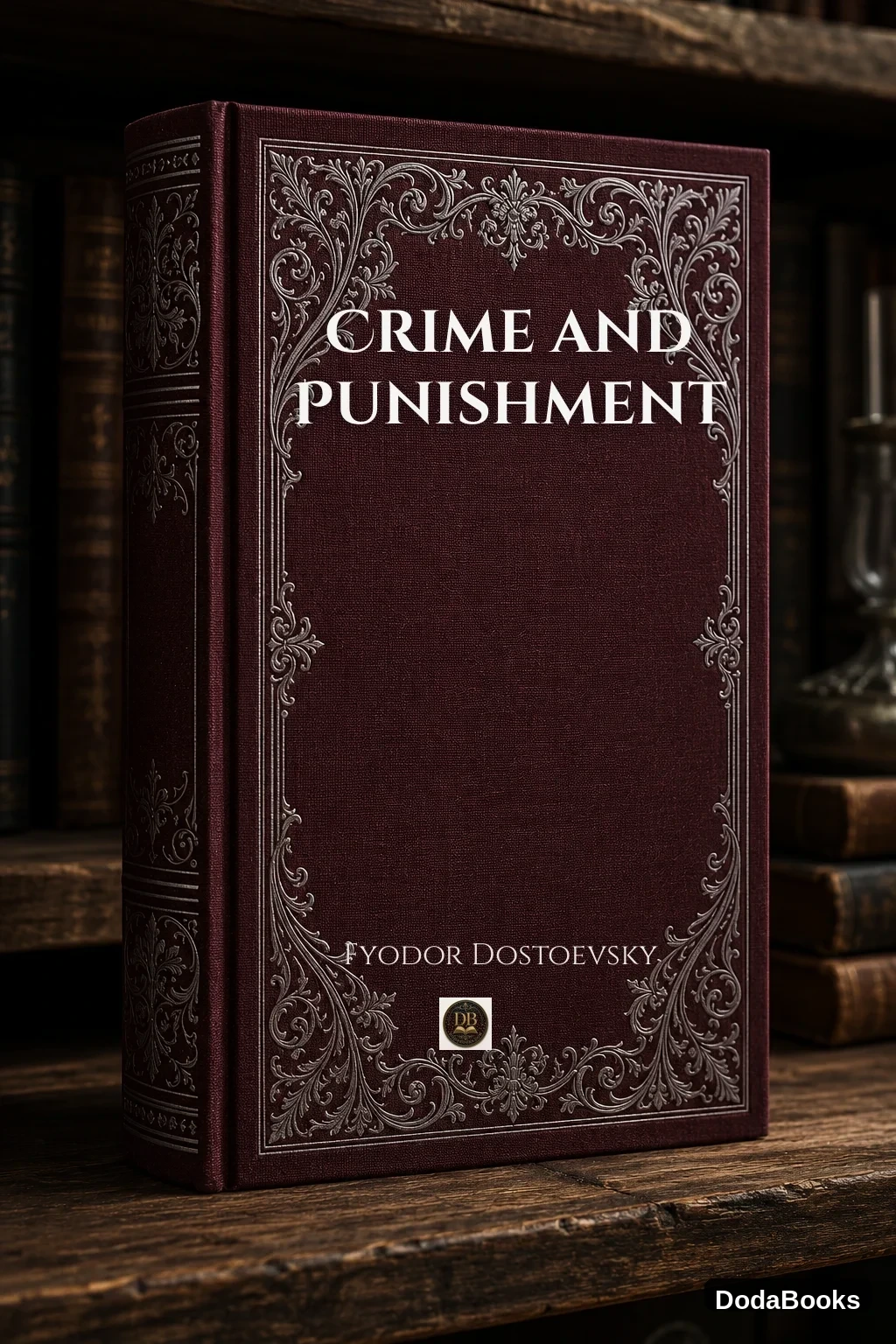
Crime and Punishment: Annotated Slavic Edition
Complete unabridged translation accompanied by 320+ scholarly annotations detailing 19th-century Petersburg topography, Tsarist legal procedures, and Orthodox theological source texts.
- ✓ Unabridged Master Translation
- ✓ 320+ Historical & Legal Footnotes
- ✓ Petersburg Street Maps & Itineraries
- ✓ DRM-Free Instant EPUB & PDF Download
Related Literature Study Guides
Explore our comprehensive library of literary masterwork analyses:
- Crime and Punishment Study Guide: Historical context of 1860s Petersburg, chapter-by-chapter breakdown, and legal procedure analysis.
- Moby-Dick Themes & Symbolism: The white whale, the doubloon, the try-works, and cosmic defiance in Herman Melville.
- The Pequod in Moby-Dick: Ship Meaning & Symbolism: The barbaric architecture and 30-man union microcosm of Melville’s doomed whaleship.
- Pride and Prejudice Themes & Symbolism: Social class, Pemberley estate, letter-writing, and dance in Jane Austen.
- Frankenstein Themes & Symbolism: The Modern Prometheus, fire and ice, monstrous doubles, and scientific hubris.
- The Great Gatsby Themes & Symbolism: The green light, the Valley of Ashes, the eyes of Dr. T.J. Eckleburg, and time.
- Jane Eyre Study Guide: The Victorian governess paradox, female autonomy, and Bertha Mason in Charlotte Brontë.
Frequently Asked Questions
What is the primary symbolic meaning of the color yellow in Crime and Punishment?
The color yellow serves as Dostoevsky’s primary visual leitmotif for spiritual decay, physical sickness, and moral corruption in St. Petersburg. It recurs in the yellow wallpaper and furniture of Alyona Ivanovna’s apartment, Raskolnikov’s yellow garret, Marmeladov’s jaundiced skin, Sonya’s yellow ticket (the Tsarist prostitute license), and the yellow bank notes given to Luzhin, visually underscoring a society poisoned by poverty and moral bankruptcy.
How does Arkady Svidrigailov function as a psychological double for Raskolnikov?
Svidrigailov represents the terrifying logical terminus of Raskolnikov’s Extraordinary Man theory. While Raskolnikov is an intellectual nihilist haunted by conscience and moral revulsion, Svidrigailov is an amoral sensualist who has genuinely stepped beyond moral boundaries without remorse. His eventual suicide by gunshot on a foggy Petersburg watchtower demonstrates that absolute autonomy divorced from moral law leads not to godhood, but to cosmic boredom and self-destruction.
What is the thematic role of the Raising of Lazarus in the novel?
The biblical story of the Raising of Lazarus (John 11), read aloud by Sonya to Raskolnikov in Part 4, symbolizes spiritual resurrection after spiritual death. Just as Lazarus lay dead in his tomb for four days, Raskolnikov has been spiritually dead since the day of his double murder. The passage establishes that no transgression is beyond divine redemption, providing the theological blueprint for Raskolnikov’s eventual spiritual awakening in the Siberian Epilogue.