The Count of Monte Cristo Characters: Dantès & Foils
When Alexandre Dumas and his chief collaborator Auguste Maquet constructed The Count of Monte Cristo (Le Comte de Monte-Cristo) between 1844 and 1846, they engineered more than a gripping historical thriller; they generated the archetypal character taxonomy of modern revenge tragedy. Across eighteen serialized volumes, the novel maps the sociological turbulence of post-Napoleonic France onto an intricate constellation of psychological foils, ideological antagonists, and moral martyrs.
At the epicenter of this narrative labyrinth stands Edmond Dantès—a character whose evolutionary trajectory from an unlettered merchant sailor to an avenging supernatural demigod, and finally to a humbled, repentant mortal, remains one of the supreme achievements of nineteenth-century European fiction. Surrounding Dantès is a gallery of figures who personify the deadly sins of the July Monarchy: financial speculation, judicial cowardice, military treason, and social climbing.
While our The Count of Monte Cristo Study Guide traces Dumas’ political context, chapter summaries, and thematic motifs, this comprehensive character analysis dissects the psychological architectures, internal conflicts, and tragic dynamics governing Dumas’ immortal ensemble.
Complete Character Roster & Structural Foils
The narrative power of Dumas’ masterpiece relies upon rigorous structural symmetry. Every virtue possessed by Edmond Dantès in his youth finds a warped mirror in one of his betrayers, while every persona he assumes during his vengeance balances justice against cruelty:
| Character | Role / Persona | Core Motivation | Fatal Flaw / Moral Anchor | Ultimate Fate |
|---|---|---|---|---|
| Edmond Dantès | Sailor / No. 34 / Monte Cristo / Lord Wilmore / Abbé Busoni | Justice, divine retribution, restorative grace | Spiritual hubris; mistaking personal vengeance for Providence | Redeemed by Haydée; departs into the Mediterranean horizon |
| Abbé Faria | Italian Polymath / Subterranean Sage | Universal knowledge, Italian unification, fraternal love | Unwittingly awakened Dantès’ thirst for retribution | Dies of catalepsy in the Château d’If; buried in the sea |
| Fernand Mondego | Count de Morcerf / Peer of France | Passionate possession of Mercédès, social prestige | Cowardice, treason, aristocratic vanity | Publicly dishonored for treason; commits suicide by pistol |
| Baron Danglars | Ship Supercargo / Multi-millionaire Banker | Wealth accumulation, corporate dominance, control | Cold calculation, lack of empathy, financial avarice | Financially ruined; starved into repentance by bandits |
| Gérard de Villefort | Crown Prosecutor / Royal Magistrate | Bureaucratic power, legal infallibility, spotless status | Ambition, judicial corruption, moral hypocrisy | Driven violently insane by domestic poison and exposure |
| Mercédès Herrera | Countess de Morcerf / Dantès’ Fiancée | Maternal devotion, nostalgic mourning, honor | Fatalistic despair; capitulation to Fernand’s courtship | Relinquishes fortune; lives in ascetic piety in Marseille |
| Haydée | Greek Princess / Dantès’ Ward & Consort | Justice for her slain father Ali Pasha, devotion to Dantès | Sheltered innocence, traumatic childhood grief | Liberated from slavery; sails away as Edmond’s beloved wife |
| Pierre Morrel | Marseille Shipowner (Pharaon) | Uncompromising mercantile integrity, honor | Vulnerability to economic ruin and predatory markets | Saved from suicide by Dantès’ anonymous gold purse |
| Maximilien Morrel | French Cavalry Captain / Pierre’s Son | Heroic loyalty, pure romantic devotion to Valentine | Absolute despair upon Valentine’s apparent death | Tested by Monte Cristo; united in paradise with Valentine |
| Valentine de Villefort | Villefort’s Saintly Daughter | Filial devotion to Noirtier, love for Maximilien | Vulnerability within a predatory, murderous household | Poisoned by stepmother; preserved and awakened by the Count |
| Noirtier de Villefort | Bonapartist Patriarch / Paralyzed Grandfather | Protecting Valentine, anti-Bourbon loyalty | Trapped in a paralyzed body, communicating only via eyes | Successfully shields Valentine; outlives the family collapse |
| Benedetto | Andrea Cavalcanti / Villefort’s Bastard Child | Hedonism, social predation, criminal revenge | Sociopathic sadism, greed, total lack of remorse | Arrested for murder; reveals Villefort’s paternity at trial |
1. Edmond Dantès: The Metamorphosis of Revenge
Edmond Dantès undergoes the most radical character transformation in French romantic literature. Dumas does not treat Dantès as a static avenger; rather, his identity is fractured, rebuilt, elevated to godhood, and eventually brought to its knees through a four-phase developmental crucible:
Phase 1: The Naive Merchant Sailor (Marseille, 1815)
At nineteen, Edmond Dantès embodies Rousseauian natural virtue and meritocratic French capability. Returning to Marseille aboard the Pharaon, he has performed brilliantly by taking command after Captain Leclère died at sea. He is devoted to his aging father Louis Dantès, passionately betrothed to the Catalan beauty Mercédès, and respected by the shipowner Morrel.
Dantès’ tragic vulnerability lies in his radical innocence. Incapable of malice, he cannot comprehend envy in others. When Danglars smolders with jealousy over Edmond’s promotion, and Fernand seethes with covetous lust for Mercédès, Edmond perceives them only as fellow men deserving goodwill. His political ignorance is absolute: when fulfilling Leclère’s dying wish to deliver a package to Elba and carry a letter to Paris, Dantès views it merely as an act of sacred maritime duty, unaware that he has been handed a political explosive.
Phase 2: Prisoner No. 34 (Château d’If, 1815–1829)
Cast into the subterranean dungeons of the Château d’If without trial, Edmond experiences the systematic annihilation of the self. Dumas divides Edmond’s fourteen-year imprisonment into psychological stages:
- The Stage of Confusion and Supplication: Believing an administrative error has occurred, Edmond petitions the prison governor, weeping and praying for justice.
- The Stage of Blasphemy and Despair: Realizing he is abandoned, Edmond rejects God, screaming in his cell until he is thrown into the lowest damp dungeon alongside the mad Italian priest.
- The Suicidal Fast: Deciding to starve himself to death, Edmond throws his food through the iron grate, slipping toward death until he hears a scraping sound beneath his stones—the subterranean tunneling of Abbé Faria.
- The Intellectual Resurrection: Faria becomes Edmond’s surrogate father, transforming him from an illiterate sailor into an aristocratic intellectual. Under Faria’s instruction, Edmond masters Greek, Latin, Italian, English, and German; studies history, political economy, and philosophy; and learns the chemistry of poisons and antidotes.
Phase 3: The Omnipotent Count (Paris & Rome, 1838)
Emerging from the sea inside Faria’s burial shroud, Edmond claims the buried Spada fortune on the barren island of Monte Cristo. He now conceives of himself not as a mortal seeking private revenge, but as the appointed sword of Divine Providence:
“I wish to be Providence itself, for the greatest, the most beautiful, the most sublime thing I know in this world is to reward and to punish.”
Dantès manufactures a pantheon of distinct personas to infiltrate every stratum of European society:
- The Count of Monte Cristo: An icy, aristocratic foreigner of unnerving pallor, whose boundless wealth, exotic tastes, and encyclopedic intellect baffle Parisian high society.
- Lord Wilmore: An eccentric English peer and philanthropist, cynical yet lavishly generous, used to reward the virtuous House of Morrel.
- Abbé Busoni: An austere Italian priest with a confessional ear, used to extract secrets, inspect court documents, and offer spiritual comfort to Caderousse before his death.
- Sinbad the Sailor: An elusive, Orientalized smuggler who dwells in underground Mediterranean palaces furnished with hashish, silk divans, and Turkish emeralds.
Phase 4: The Chastened Mortal and “Wait and Hope”
Dantès’ divine masquerade shatters during the climax of the Villefort retribution. He intended to destroy Gérard de Villefort through legal exposure and the revelation of his buried bastard child. He did not foresee that Madame de Villefort would poison her innocent nine-year-old son Édouard before swallowing poison herself.
Faced with the corpse of the child in the Villefort parlor, Dantès experiences an agonizing moral crisis:
“Monte Cristo turned pale at this horrible sight. He felt that he had passed beyond the bounds of vengeance, and that he could no longer say, ‘God is for me and with me.’”
He rushes to the Château d’If to revisit his old dungeon cell, seeking reassurance that his years of suffering justified his retribution. Finding Faria’s written treatise, he realizes that true justice belongs to God alone. He forgives Danglars before the banker starves to death, gives his island palace and fortune to Maximilien and Valentine, and accepts Haydée’s unconditional love, concluding his journey with the immortal maxim: “All human wisdom is contained in these two words—Wait and hope.”
2. Abbé Faria: The Polymathic Mentor & Intellectual Catalyst
If Edmond Dantès is the epic hero, Abbé Faria is the Prometheus who brings him fire. A Catholic priest, Italian patriot, secretary to Cardinal Spada, and political prisoner, Faria is dismissed by the Château d’If guards as an eccentric madman because he repeatedly offers millions of francs in exchange for his release.
The Moral Tragedy of Faria’s Gift
Faria’s tragedy lies in the disparity between his intentions and their consequences. He sought to free Edmond physically through their shared escape tunnel, and intellectually through education. Yet, when Faria analyzes the motives of Fernand and Danglars, he witnesses Dantès’ sudden transformation:
“Alas!” murmured the abbé, “I have done you a great injury. I have made your heart bitter; I have instilled in your soul a desire that was not there before—revenge.”
Faria’s sudden death from a third apoplectic seizure prevents him from restraining Edmond’s vengeful zeal. However, Faria’s memory remains Edmond’s ultimate spiritual conscience. Whenever the Count doubts the righteousness of his deeds, he invokes the ghost of Faria, until the dead child Édouard forces him to admit that Faria would never have sanctioned murder.
3. The Villainous Triumvirate: The Sins of the July Monarchy
Dumas structures the antagonists not as cartoonish villains, but as sociological archetypes representing the dominant institutions of nineteenth-century French society: the Military Aristocracy, the Financial Oligarchy, and the Judicial State.
Fernand Mondego (Count de Morcerf): Treason and Aristocratic Vanity
Fernand is the catalyst of passion. A poor Catalan fisherman from the village of Les Catalans, he is consumed by frantic, unrequited love for his cousin Mercédès. Incapable of matching Edmond’s maritime honor, he relies on Danglars’ intellect to destroy his rival:
Fernand’s rise in French society is built on treason. While fighting in Greece, he gained the confidence of Ali Pasha, the ruler of Janina. Fernand betrayed Ali Pasha’s fortress to the Ottoman Turks in exchange for a massive fortune, assassinated the Pasha, and sold his wife Vasiliki and toddler daughter Haydée into sex slavery.
Returning to Paris dripping in stolen gold, Fernand buys the title of Count de Morcerf, marries the grief-stricken Mercédès, and sits in the Chamber of Peers. His destruction is poetic: Dantès does not kill him with a sword. Instead, Dantès introduces Haydée into French society, where she presents the documents of Fernand’s treason directly to the French Senate. When Albert challenges Monte Cristo to a duel, Mercédès reveals Edmond’s identity to Albert, who publicly apologizes to the Count. Stripped of his military honor, deserted by his wife, and repudiated by his beloved son, Fernand confronts the Count in his mansion. When the Count reveals his name—“Edmond Dantès!"—Fernand flees to his palace and puts a bullet through his brain.
Baron Danglars: Cold Calculation and Commercial Greed
If Fernand represents passionate violence, Baron Danglars embodies cold, calculating mercantilism. As the supercargo (business manager) of the Pharaon, Danglars possesses a ledger for a soul:
- The Forgery of the Denunciation: Driven by jealousy over Dantès’ elevation to captain, Danglars writes the treasonous denunciation letter with his left hand, crumples it, and lets Fernand retrieve it from the floor of the tavern of La Réserve.
- The Rise of High Finance: Danglars leaves the maritime trade to enter banking during the Spanish wars, amassing twenty million francs, acquiring a barony, and marrying the wealthy widow Madame de Nargonne.
- The Architecture of his Ruin: Dantès destroys Danglars through his own god: money. Utilizing the Spanish bond telegraph system (bribing a semaphore operator to send false market panic signals), Monte Cristo drains Danglars’ liquidity. He then manufactures the fake Prince Andrea Cavalcanti, inducing Danglars to break his daughter Eugénie’s engagement to Albert de Morcerf in pursuit of Cavalcanti’s phantom wealth.
- The Famine in the Catacombs: Fleeing Paris with five million francs stolen from hospital charities, Danglars is captured in Italy by the bandit Luigi Vampa. Imprisoned in the catacombs of San Sebastiano, Danglars is charged exorbitant prices for food: 100,000 francs for a loaf of bread, 20,000 francs for a roast fowl. Within days, his millions are consumed by starvation. When Danglars is reduced to drinking water from a gutter and begging for a crust of bread, Dantès appears, declares his identity, and grants him his life—leaving him an old, white-haired beggar with fifty thousand francs to comprehend his spiritual poverty.
Gérard de Villefort: Judicial Hypocrisy and Institutional Rot
Gérard de Villefort is the most complex and morally repugnant of the three conspirators. As Deputy Crown Prosecutor in Marseille, Villefort is not motivated by personal hatred of Dantès; he recognizes Edmond’s absolute innocence during their initial interrogation:
- The Patricidal Dilemma: The Bonapartist letter carried by Dantès is addressed to Noirtier de Villefort—Gérard’s own father, a fierce supporter of the exiled Napoleon. If the Royalist government discovers that the prosecutor’s father is the head of the Bonapartist committee in Paris, Gérard’s career will be destroyed.
- The Sacrifice of Justice: To safeguard his marriage to Mademoiselle de Saint-Méran and ensure his promotion under King Louis XVIII, Villefort burns the letter in his office fireplace and orders Dantès sealed in the Château d’If for life without a warrant or trial.
- The Buried Sin (Benedetto): Years later, Villefort conducts an adulterous affair with Madame Danglars. When she gives birth to an illegitimate child in a secluded house in Auteuil, Villefort places the infant in a box and buries it alive in the garden. The Corsican smuggler Bertuccio witnesses the act, stabs Villefort in revenge for a family feud, and digs up the box, reviving the baby—who grows up to be the vicious criminal Benedetto.
- The Catastrophe of the Poisoning: The Count introduces Villefort’s second wife, Héloïse, to the chemistry of poisons. Motivated by frantic ambition to secure the entire family inheritance for her young son Édouard, Madame de Villefort systematically poisons Valentine’s maternal grandparents and the family servant Barrois.
- The Courthouse Exposure: When Benedetto is tried for murder, he stuns the courtroom by declaring that the Crown Prosecutor Villefort is his biological father who buried him alive. Shattered, Villefort returns home intending to forgive his wife and flee Paris, only to find that Héloïse has poisoned both herself and their nine-year-old child Édouard. Leading Monte Cristo into the nursery, Villefort asks: “Look, Edmond Dantès! Is your vengeance complete now?” Villefort descends into screaming madness, furiously digging in his garden with a spade to search for the infant he buried decades before.
4. The Women of the Saga: Love, Memory, and Deliverance
Dumas’ female characters provide the emotional and spiritual poles between which Edmond Dantès’ soul navigates:
Mercédès Herrera: The Melancholy of Broken Faith
Mercédès is the tragic heart of The Count of Monte Cristo. Unlike the villains who flourish in worldly corruption, Mercédès suffers continuous internal exile:
- The Capitulation to Despair: When Edmond is arrested on their betrothal feast, Mercédès waits eighteen months in suicidal grief. Impoverished, isolated, and led to believe Edmond died in prison, she finally surrenders to the persistent courting of Fernand Mondego.
- The Recognition: While all of Paris marvels at the Count of Monte Cristo without suspecting his origins, Mercédès recognizes Edmond the instant she hears his voice and sees his eyes. She keeps the secret locked within her heart, trembling whenever he enters her home.
- The Midnight Intercession: The dramatic turning point of the entire novel occurs in Chapter 89 (“The Promise”), when Mercédès comes to Monte Cristo’s study in the dead of night to beg for her son Albert’s life. Calling him by his lost name—“Edmond, you will not kill my son!"—she breaks his icy resolve. Dantès agrees to let Albert shoot him in their duel the next morning, willingly offering his own life to spare hers:
“He who has devoted twenty years to revenge will sacrifice that revenge, his life, his fortune, to a word from you!”
- Renunciation and Atonement: After Albert renounces Fernand’s duel, Mercédès refuses to touch a single coin of Morcerf’s blood-stained millions. She leaves her luxurious Parisian mansion carrying only her clothes, returning to Marseille to live in the small house Edmond once bought for his father, dedicating the remainder of her life to solitary prayer.
Haydée: From Captive Witness to Spiritual Redeemer
Haydée represents the antithesis of Mercédès. While Mercédès belongs to Edmond’s lost past, Haydée embodies his redeemed future:
- The Living Testimony: Purchased by Monte Cristo in the slave markets of Constantinople, Haydée is treated not as a concubine, but as a sovereign queen within his palace. Her testimony before the Chamber of Peers shatters Morcerf’s façade, avenging her father Ali Pasha through truth rather than subterfuge.
- The Healing of the Avenger: While the Count initially regards Haydée as a ward whom he intends to marry off with a massive dowry, she confesses her passionate, unconditional love for him. When Edmond’s soul is shattered by the death of young Édouard, Haydée’s love reassures him that he is still capable of human affection, pulling him back from the brink of spiritual death.
5. The House of Morrel: The Sanctuary of Virtue
Dumas balances the pitch-black criminality of the Parisian elite against the radiant virtue of the Morrel family. They provide the moral justification for Dantès’ wealth:
Pierre Morrel: Mercantile Honor Preserved
Pierre Morrel is Edmond’s first employer, a Marseille shipowner whose business collapses due to maritime disasters:
- When the Pharaon sinks, Morrel pays every sailor’s wage and honors every creditor’s debt, refusing to declare fraudulent bankruptcy.
- Facing absolute ruin on the day his final promissory notes mature, Morrel prepares to shoot himself to preserve his family’s honor.
- At the final second, Dantès intervenes through his alias Lord Wilmore: he pays every note, leaves a purse of gold diamonds for Morrel’s daughter Julie, and sails a newly built replica of the Pharaon into the port of Marseille. Morrel recognizes the miraculous hand of Dantès before his death, whispering Edmond’s name on his deathbed.
Maximilien Morrel: The Trial of Faith
Maximilien, Morrel’s son, is a brave captain of the French Spahis and the romantic partner of Valentine de Villefort:
- The Ultimate Test: When Valentine is apparently poisoned by her stepmother, Monte Cristo places her into a death-like coma using a narcotic pill. To test Maximilien’s faith and demonstrate the depth of divine joy, the Count allows Maximilien to believe Valentine is dead for an entire month.
- The Island of Monte Cristo: On the island of Monte Cristo, the Count prepares a draught of poison for Maximilien, telling him that if he still desires death after thirty days of mourning, he may take his own life. As Maximilien drinks the cup (which is merely a tranquilizing elixir), Valentine steps through the curtains. Maximilien awakens to find his beloved alive, their fortune secured, and the Count departed into the sea, leaving them the island and palaces as an eternal sanctuary.
Comparative Matrix: Character Foils & Contrasts
Dumas’ storytelling brilliance relies on mirroring characters to expose their contrasting moral choices:
| Base Character | Foil Character | Central Thematic Contrast |
|---|---|---|
| Edmond Dantès (Avenger) | Maximilien Morrel (Hero) | Dantès wields vengeance and takes life; Maximilien wields self-sacrifice and forgives. |
| Abbé Faria (Christian Sage) | Abbé Busoni (Vengeful Priest) | Faria forgives his jailers and teaches love; Busoni extracts confessions and pronounces doom. |
| Fernand Mondego (False Count) | Edmond Dantès (True Noble) | Fernand gains nobility through treason and cowardice; Dantès gains nobility through intellect and suffering. |
| Baron Danglars (Speculator) | Pierre Morrel (Merchant) | Danglars cheats his partners and hoards gold; Morrel sacrifices his life to honor his debts. |
| Gérard de Villefort (Corrupt Judge) | M. Noirtier (Loyal Revolutionary) | Villefort bends the law for personal promotion; Noirtier sacrifices everything for his ideological oath. |
| Mercédès (Memory/Sorrow) | Haydée (Rebirth/Hope) | Mercédès is tied to the dead past of Marseille; Haydée is the living dawn of the Mediterranean future. |
Recommended Critical Edition
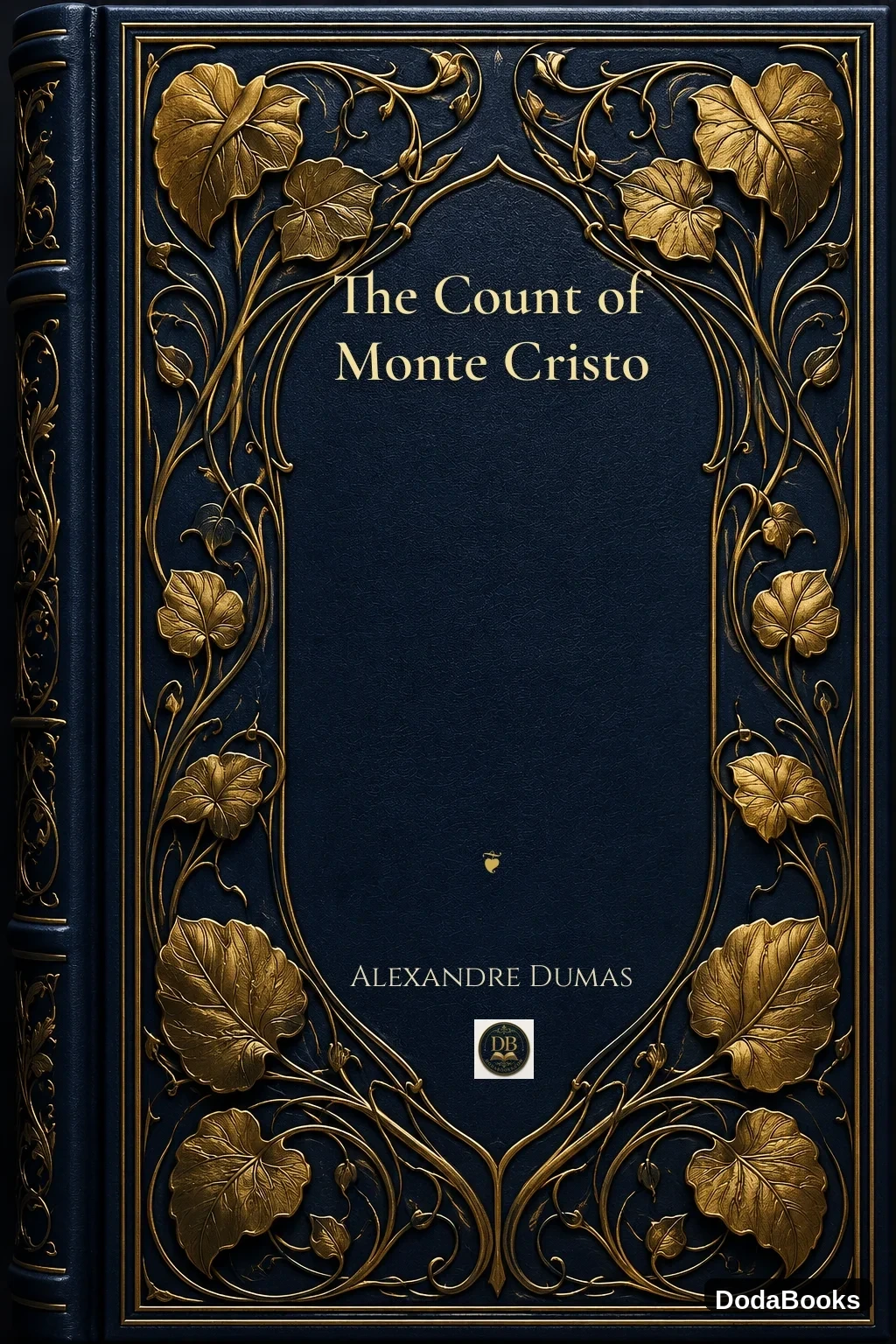
For literature enthusiasts, university students, and serious collectors seeking the definitive unabridged masterwork with complete character trees, historical annotations on post-Napoleonic France, and comprehensive essays, we recommend the unabridged edition from DodaBooks:
Frequently Asked Questions
Why does Dantès spare Baron Danglars while destroying Fernand and Villefort?
Dantès spares Danglars because his moral perspective undergoes a radical shift following the unexpected death of innocent nine-year-old Édouard de Villefort. After witnessing the boy’s corpse, Dantès realizes that his assumption of divine omniscience has crossed into mortal hubris. When he arrives at Luigi Vampa’s catacomb prison to find Danglars starved to the brink of death, Dantès chooses mercy over annihilation. He demands that Danglars repent, gives him his life, and leaves him with fifty thousand francs, showing that divine justice demands repentance rather than slaughter.
Why does Mercédès choose to live in poverty in Marseille rather than join Dantès?
Mercédès refuses to marry Dantès or accept his fortune because her conscience will not permit her to live happily on the spoils of a catastrophe. She views herself as having failed Edmond through her marriage to Fernand, despite having believed Edmond was dead. Furthermore, accepting Edmond’s immense wealth would taint her grief and compromise her dignity. By returning to the modest cottage in Marseille where Edmond’s father died and dedicating her remaining years to prayer and ascetic living, she preserves her tragic integrity.
What is the significance of the character Benedetto (Andrea Cavalcanti)?
Benedetto serves as the physical incarnation of Gérard de Villefort’s hidden corruption. As an illegitimate baby whom Villefort attempted to bury alive in a garden, Benedetto is raised by smugglers and becomes a vicious thief and murderer. When Monte Cristo introduces him into Parisian high society disguised as the wealthy nobleman Prince Andrea Cavalcanti, Benedetto acts as a living bomb. His ultimate trial in Paris provides the stage where Villefort’s private infanticide is exposed to the world, proving that institutional authority cannot bury its sins beneath bureaucratic respectability.
Related Masterwork Guides & Deconstructions
Continue your exploration of classic world literature, revenge tragedy, and psychological character arcs with our companion guides:
- The Count of Monte Cristo Study Guide: Themes & Plot: The foundational comprehensive study guide to Dumas’ serialized masterpiece.
- Frankenstein Characters Analysis: Victor & Creature: Analyze Shelley’s tragic Promethean creator, the eloquent Creature, and their psychological warfare.
- Dracula Characters Analysis: Van Helsing & Foils: Deconstruct Bram Stoker’s occult predator, the Crew of Light, and Gothic modernity.
- The Brothers Karamazov Characters: The Karamazov Soul: Examine Dostoevsky’s epic dialectic between Dmitri, Ivan, Alyosha, and Smerdyakov.
- The Great Gatsby Study Guide: Themes, Symbols & 1920s: Explore F. Scott Fitzgerald’s timeless anatomy of reinvention and desire.