The Brothers Karamazov Characters: The Four Brothers
Published in 1880 shortly before Fyodor Dostoevsky’s death, The Brothers Karamazov (Brat’ya Karamazovy) stands as the supreme summit of nineteenth-century philosophical and psychological fiction. Centered around a sordid provincial scandal—the murder of the depraved, clownish patriarch Fyodor Pavlovich Karamazov—the novel expands into a cosmic interrogation of free will, the problem of innocent suffering, faith versus rationalism, and moral accountability.
Dostoevsky’s genius lies in dividing the fragmented consciousness of humanity among the four Karamazov sons: the explosive, sensualist soldier Dmitri, the brilliant, agonized rationalist Ivan, the radiant, cherubic monk Alyosha, and the resentful, illegitimate lackey Pavel Smerdyakov. Anchoring the novel’s spiritual pole is the elder Father Zosima, whose gospel of cosmic mutual guilt provides the transcendent counterweight to modern European nihilism.
While our foundational The Brothers Karamazov Study Guide outlines the novel’s thematic overview and courtroom show trial, this comprehensive study provides an academic character analysis of Dostoevsky’s cast, examining their psychological archetypes, philosophical positions, and spiritual trajectories.
Master Character Roster & Archetypal Matrix
| Character | Dimension of Being | Psychological Archetype | Core Philosophical Stance |
|---|---|---|---|
| Dmitri Karamazov (Mitya) | The Physical Body / Senses | The Passionate Sinner / Tragic Penitent | Tormented by chaotic passion; redeemed by accepting suffering for the universal “babe.” |
| Ivan Karamazov | The Rational Intellect | The Euclidean Rebel / Tragic Dialectician | Rejects divine harmony over innocent suffering; paralyzed by “all is permitted.” |
| Alexei Karamazov (Alyosha) | The Spiritual Soul | The Holy Innocent / Disciple of Love | Practices active, forgiving love in the secular world; anchors the novel’s hope. |
| Pavel Smerdyakov | The Resentful Subconscious | The Nihilistic Lackey / Patricide | Internalizes Ivan’s rationalism to murder the father; consumed by nihilistic suicide. |
| Fyodor Pavlovich | The Depraved Animal | The Grotesque Clown / Sensualist Patriarch | Cynical hedonism, greed, and buffoonery used as psychological armor against shame. |
| Father Zosima | The Transcendent Spirit | The Orthodox Elder / Spiritual Healer | Cosmic mutual guilt: “Every one of us is guilty before all, for all and everything.” |
| Agrafena (Grushenka) | The Sensual Earth | The Fallen Magdalen / Transformed Lover | Evolves from mercenary femme fatale into Dmitri’s devoted partner in redemption. |
| Katerina Ivanovna | The Proud Will | The Haughty Aristocrat / Self-Lacerating Martyr | Paralyzed by pride and moral superiority; betrays Dmitri at the murder trial. |
1. Dmitri Karamazov (Mitya): The Passionate Sensualist and Moral Regeneration
Dmitri Fyodorovich Karamazov, the twenty-eight-year-old eldest son, embodies what Dostoevsky termed the “broad Karamazov nature”—a tempestuous Russian soul capable of contemplating the highest spiritual ideals while simultaneously wallowing in the most degrading debauchery:
The Battleground of the Heart
In Chapter 3 of Book III, Dmitri confesses his divided nature to Alyosha in an unforgettable philosophical outburst:
“Beauty is a fearful and terrible thing! It is fearful because it is undefinable… Here the boundaries meet and all contradictions exist side by side… The awful thing is that beauty is mysterious as well as terrible. God and the devil are fighting there and the battlefield is the heart of man.”
Dmitri possesses genuine nobility of spirit, yet is completely enslaved by his volatile passions:
- The Feud Over Inheritance and Grushenka: Dmitri is locked in a savage, public war with his father Fyodor Pavlovich over both his maternal inheritance and their mutual sexual obsession with the intoxicating Grushenka.
- The Lacerating Shame of the Three Thousand Rubles: Dmitri’s greatest agony is moral shame. When his aristocratic fiancée Katerina Ivanovna entrusts him with three thousand rubles to send to Moscow, Dmitri spends half of it on a wild orgy with Grushenka in Mokroye, sewing the remaining fifteen hundred rubles into a cloth amulet around his neck. To Dmitri, being a wild profligate is excusable, but being a common thief who secretly holds back stolen money makes him a “scoundrel.”
Dmitri’s transformation from a violent sensualist into a sacrificial saint represents Dostoevsky’s profound belief that emotional suffering and humble repentance, rather than intellectual theory, redeem the soul. This arc mirrors Raskolnikov’s spiritual resurrection in our Crime and Punishment Study Guide.
2. Ivan Karamazov: The Euclidean Dialectician and Metaphysical Rebel
Ivan Fyodorovich Karamazov, the twenty-four-year-old middle son, is one of the most formidable intellectual creations in world literature: a brilliant, cold rationalist whose philosophical rebellion against divine cosmic justice forms the intellectual center of the novel:
The Rejection of the Ticket: Theodicy and Innocent Suffering
In Book V (“Pro and Contra”), Ivan delivers his devastating indictment of God’s universe to Alyosha in a tavern:
- Euclidean Earthly Logic: Ivan does not deny God’s existence; he rejects the world God created. With his limited, three-dimensional “Euclidean mind,” Ivan cannot accept that the eternal harmony of paradise is worth the unrequited agony of a single tortured child.
- The Catalogue of Tortured Children: Ivan recounts horrific real-world newspaper accounts of child abuse: Turkish soldiers tossing babies into the air to catch them on bayonets, and aristocratic Russian masters setting hunting hounds to tear an eight-year-old serf boy to pieces before his mother’s eyes.
- Returning the Ticket: Ivan refuses to participate in a paradise purchased with innocent tears: “It’s not God that I don’t accept, Alyosha, only I most respectfully return Him the ticket.”
Ivan’s tragedy is that his intellect cannot survive the logical consequences of its own theories. When Smerdyakov proves to Ivan that Smerdyakov killed Fyodor Pavlovich precisely because Ivan declared that “all is permitted,” Ivan’s pride disintegrates into brain fever and psychological madness.
3. Alexei Karamazov (Alyosha): The Cherubic Disciple of Active Love
Alexei Fyodorovich Karamazov, the twenty-year-old youngest brother, is designated by Dostoevsky in his preface as the novel’s true hero:
The Living Gospel of Active Love
Alyosha is not a cloistered mystic or an intellectual theorist; he is an open-hearted, intuitive young man who embodies Father Zosima’s teaching of active love:
- Alyosha listens without judging. He moves fluidly between the novel’s warring factions—comforting Dmitri in his fury, consoling Ivan in his intellectual despair, soothing Katerina Ivanovna’s pride, and tending to the dying schoolboy Ilyusha.
- He possesses the rare gift of total lack of malice: people instinctively open their deepest secrets to him because he radiates unconditional empathy.
Alyosha demonstrates that faith is validated not through intellectual theological arguments (which Ivan easily dismantles), but through the living practice of forgiveness and community healing.
4. Pavel Smerdyakov: The Ressentiment-Fueled Patricide
Pavel Fyodorovich Smerdyakov is the dark, illegitimate fourth brother whose presence poisons the Karamazov estate:
The Bastard Son of Stinking Lizaveta
Born in Fyodor Pavlovich’s bathhouse to the mute, holy fool Lizaveta Smerdyashchaya (“Stinking Lizaveta”), Smerdyakov is raised as a servant in the house of his own biological father:
- Smerdyakov grows up consuming a toxic diet of ressentiment—bitter, envious hatred of his legitimate brothers, combined with cold, arrogant contempt for Russian peasant life.
- As a boy, he hangs stray cats and gives them elaborate funerals; as an adult, he trains as a gourmet cook in Moscow, adopting dandyish clothes and cold pomposity.
- He suffers from severe epilepsy, which he uses strategically: faking an epileptic fit to create an airtight alibi on the night of the murder.
Smerdyakov represents the horrific reality of theoretical nihilism when put into practice by a cold, resentful lackey.
5. Fyodor Pavlovich Karamazov: The Grotesque Clown Patriarch
Fyodor Pavlovich Karamazov is one of Dostoevsky’s most repulsive, yet psychologically acute, portraits:
Buffoonery as a Shield Against Shame
Fyodor Pavlovich is an old, sensualist landowner whose face resembles a Roman emperor of the decadence: flabby skin, sensual lips, and little pig eyes:
- The Psychology of the Clown: He behaves like a shameless buffoon in polite society, insulting monks in Father Zosima’s cell and boasting of his sexual depravities. He explains to Zosima that he acts like a buffoon because he knows he is despicable, using clownish mockery preemptively so that people cannot humiliate him.
- The Greed of the Sensualist: Fyodor hoards money obsessively because he fears poverty in his old age: “I want to sin up to my dying day, and money alone buys sin when one’s youth is gone.”
- The Competition with his Son: His willingness to compete with his own son Dmitri for Grushenka’s sexual favors—leaving three thousand rubles in an envelope addressed “To my angel Grushenka, if she comes”—represents the total moral collapse of the paternal archetype. His murder is an inevitable harvest of the rot he sowed in his family.
6. Father Zosima: The Theology of Cosmic Responsibility
Elder Zosima is the spiritual sun around which the dark planet of the Karamazov family revolves:
The Doctrine of Universal Guilt
Before his death, Zosima delivers his spiritual testament to Alyosha:
“There is only one salvation for you: take yourself and make yourself responsible for all men’s sins, that is the truth, you know, for as soon as you sincerely make yourself responsible for everything and for all men, you will see at once that it is really so, and that you are to blame for everyone and for all things.”
Zosima teaches that humanity is an organic spiritual whole. We cannot judge criminals from an attitude of self-righteous superiority, because our own daily cruelties, neglects, and moral failings contribute to the atmospheric rot that drives men to murder. By bowing down before Dmitri during their first meeting in the monastery, Zosima foresees Dmitri’s coming agony and reveres the divine suffering that will purify him.
Recommended Critical Edition
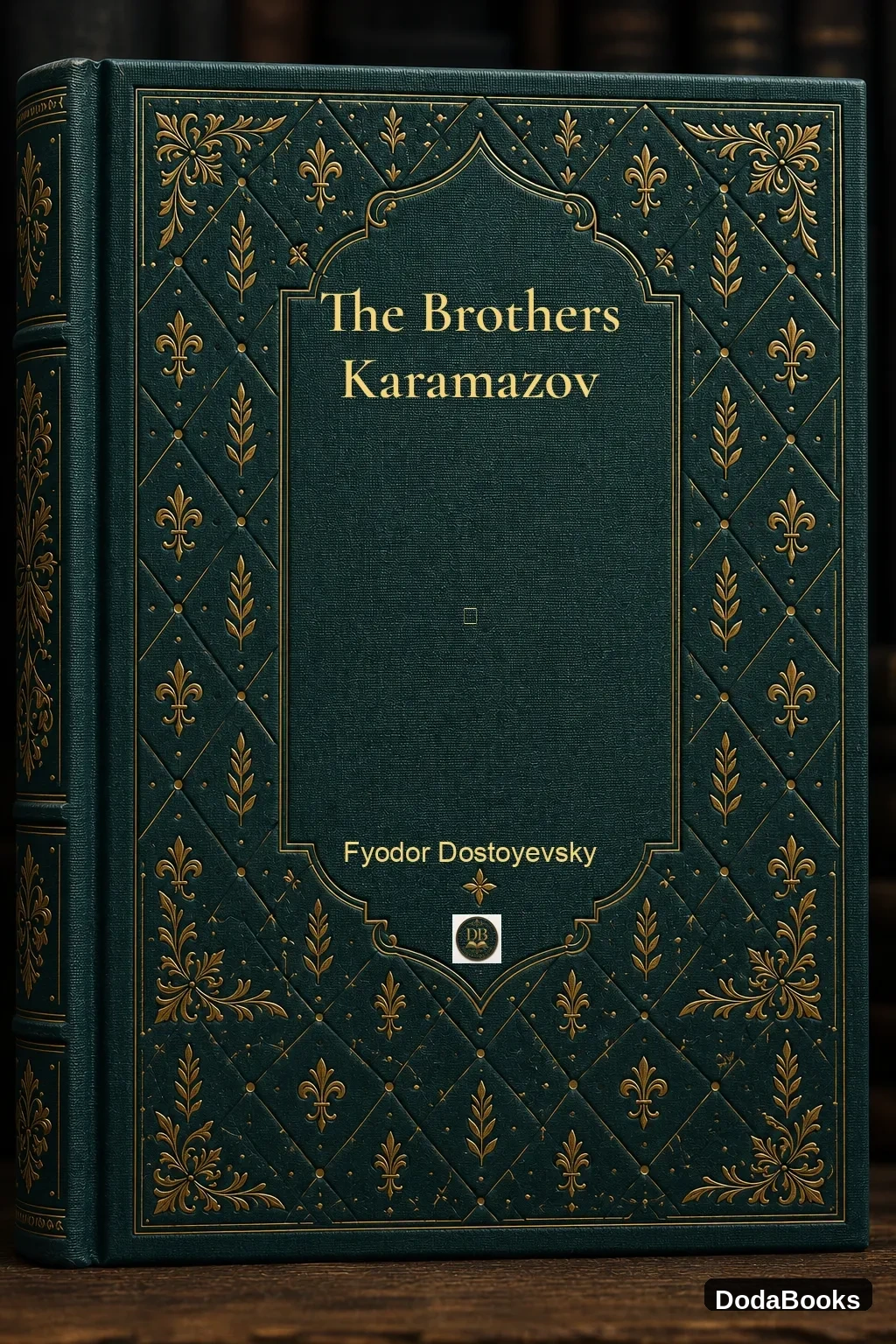
For scholars of Russian literature, philosophy students, and book lovers seeking the definitive complete text with extensive character breakdowns, historical notes on Russian monasticism, and critical essays, we recommend the unabridged edition from DodaBooks:
The Brothers Karamazov: Complete Edition
Experience Fyodor Dostoevsky’s crowning masterpiece in a magnificent scholarly presentation. Featuring the complete unabridged 12-book novel text, exhaustive character profiles of the four brothers, historical footnotes on nineteenth-century Russian legal reforms, and theological essays.
- Complete, authoritative unabridged 12-book novel text
- Comprehensive character analyses of Ivan, Dmitri, Alyosha, and Smerdyakov
- Exquisite custom 3D typography and digital formatting optimized for modern e-readers
- Instant EPUB download compatible with Kindle, Apple Books, and Kobo
Frequently Asked Questions
What does Grushenka’s character transformation represent?
Agrafena Alexandrovna Svetlova (Grushenka) begins the novel as a proud, calculating provincial coquette who toys with both Fyodor Pavlovich and Dmitri to avenge herself against the Polish officer who seduced and abandoned her at age seventeen. However, when Dmitri shows her unconditional, worshipful devotion and Alyosha treats her with pure brotherly respect (“she gave me an onion”), Grushenka’s hard shell dissolves. She rejects wealth, embraces Dmitri in Mokroye, and vows to follow him to Siberia, transforming into an archetype of passionate, loyal Russian love.
Why does Katerina Ivanovna betray Dmitri at his murder trial?
Katerina Ivanovna’s character is governed by aristocratic pride and pathological self-laceration. Although she believed she loved Dmitri and pledged to be his noble savior, she secretly loves Ivan. At the trial, when Ivan collapses into madness after attempting to confess his own moral guilt, Katerina rushes to save Ivan’s reputation. Blaming Dmitri for Ivan’s mental breakdown, she produces Dmitri’s drunken, desperate letter written before the murder stating he would kill his father if necessary, damning Dmitri to hard labor to protect the man she truly loves.
What is the thematic role of the schoolboys and Ilyusha in the novel?
The schoolboys—led by the precocious, proud Kolya Krasotkin and centered around the dying child Ilyushechka—represent the future of Russia. Through Alyosha’s gentle mentorship, the boys abandon their cruel playground bullying, rally around Ilyusha’s deathbed with flowers and love, and form a tight-knit community. The novel’s final scene at Ilyusha’s stone, where the boys shout “Hurrah for Karamazov!”, affirms that innocence, memory, and love can overcome the cynical cycle of patricide and despair.
Explore Related Literature Masterworks
Continue your exploration of classic world literature and psychological character arcs with our companion analyses:
- The Brothers Karamazov Study Guide: Full Analysis: The foundational comprehensive study guide to Dostoevsky’s crowning philosophical masterpiece.
- Crime and Punishment Study Guide: Plot, Motifs & Context: Master Raskolnikov’s psychological torment, Napoleon complex, and Siberian redemption.
- Crime and Punishment Themes & Symbolism: Analysis of Motifs: Explore the Extraordinary Man theory, yellow tickets, and the raising of Lazarus.
- Hamlet Study Guide: Tragedy, Characters & Themes: Examine Shakespeare’s supreme drama of patricide, existential paralysis, and philosophical skepticism.