The Count of Monte Cristo Study Guide: Themes & Plot
When Alexandre Dumas published The Count of Monte Cristo in serialized installments in the Paris newspaper Le Journal des Débats between August 1844 and January 1846, France was gripped by absolute narrative mania. Crowds mobbed printing presses, carriage drivers held bets on Edmond Dantès’ next move, and Dumas cemented his reputation as the greatest popular adventure novelist in world literature.
Yet reducing The Count of Monte Cristo to a simple historical revenge melodrama ignores its immense philosophical depth. Across eighteen volumes and more than a thousand pages, Dumas crafts an epic meditation on post-Napoleonic French cynicism, the corruptibility of modern legal institutions, the psychological trauma of long-term imprisonment, and the moral limits of human retribution masquerading as divine justice.
While our studies on The Great Gatsby Study Guide and Moby-Dick Study Guide explore self-invented identity and monomaniacal vengeance across other literary traditions, this comprehensive guide provides an academic deconstruction of Dumas’ ultimate masterwork.
Fast Facts: Masterwork Overview
| Category | Detail |
|---|---|
| Author | Alexandre Dumas (1802–1870), assisted by collaborator Auguste Maquet |
| First Publication | Serialized August 1844 – January 1846 (Le Journal des Débats); 18-volume book edition 1846 (Pétion, Paris) |
| Literary Genre | Historical Adventure / Revenge Tragedy / Philosophical Romance / Serialized Feuilleton |
| Setting | Marseille, Rome, Paris, and the Mediterranean island of Monte Cristo, spanning 1815–1838 |
| Narrative Form | Expansive third-person omniscient narrative weaving multiple subplots, masquerades, and political eras |
| Central Conflict | The righteous vengeance of the resurrected Edmond Dantès vs. the corrupt Parisian ruling triumvirate |
| Climax | The exposure of Villefort in court and the poisoning of young Édouard (Chapters 109–111), leading to Dantès’ spiritual crisis |
| Key Motifs | The red silk purse, the Spada emerald pillbox, Bonapartist letters, poison, hashish, the phrase “Wait and hope” |
1. Historical & Political Background: Post-Napoleonic Turbulence
Dumas grounds the narrative in the turbulent political climate of France between the fall of Napoleon Bonaparte in 1815 and the July Monarchy of Louis-Philippe in the late 1830s.
The tragedy begins on February 24, 1815—the exact week Napoleon was preparing his daring escape from exile on the island of Elba to reclaim the French throne for the Hundred Days:
- The Bonapartist Conspiracy: Young Edmond Dantès, returning to Marseille as the prospective captain of the merchant ship Pharaon, carries an innocent letter from Elba given to him by his dying captain. Dantès does not realize that the letter is addressed to Noirtier de Villefort, a prominent Bonapartist revolutionary in Paris.
- The Opportunism of Gérard de Villefort: Crown Prosecutor Villefort is preparing to marry into an aristocratic royalist family to secure his career under King Louis XVIII. When Villefort realizes that Dantès’ letter names his own father as a traitor, he burns the letter to protect his family name and buries Dantès without trial inside the state prison of the Château d’If.
Dumas uses this political intrigue to expose how fragile ordinary working-class lives were in nineteenth-century Europe, where innocent citizens could be erased in a heartbeat by self-serving political bureaucrats.
2. The Three Architects of Betrayal
Edmond Dantès is not felled by random misfortune; he is systematically destroyed by a conspiracy of three men representing the three dominant corrupting forces of modern society:
3. The 14-Year Crucible: Edmond Dantès’ Metamorphosis
The transformation of Edmond Dantès from a sweet, illiterate nineteen-year-old sailor into the omnipotent, calculating Count of Monte Cristo is the narrative backbone of the novel:
Abbé Faria: The Intellectual Father
Abbé Faria is the crucial catalyst of the novel. Before meeting Faria, Dantès believes his imprisonment was an inexplicable mistake. Using deductive logic that directly anticipates Sherlock Holmes, Faria interrogates Dantès about his final days in Marseille, connects the motives of Danglars, Fernand, and Villefort, and reveals the exact architecture of the conspiracy.
Faria gives Dantès more than immense wealth; he gives him an intellectual operating system. When Dantès emerges from the Mediterranean waves, he is no longer an ordinary mortal; he has become a living embodiment of superhuman will, polymathic knowledge, and infinite resources.
4. The Anatomy of Retribution: Tailored Punishments
When the Count arrives in Paris in 1838, he does not challenge his enemies to duels or shoot them in dark alleys. Like a classical Greek god or a forensic engineer, Dantès designs punishments that allow his enemies’ own fatal vices to destroy them:
| Traitor | Governing Vice | Dantès’ Tailored Retribution | Ultimate Fate |
|---|---|---|---|
| Fernand Mondego (Count de Morcerf) | False military honor, aristocratic vanity, and romantic theft. | Dantès introduces Haydée (daughter of Ali Pasha), who testifies to the French Chamber of Peers that Fernand betrayed and murdered her father and sold her into slavery. | Publicly disgraced by the peerage, deserted by Mercédès and his son Albert, Fernand shoots himself in his mansion. |
| Gérard de Villefort | Hypocritical legal virtue, social status, and political cover-ups. | Dantès exposes that Villefort fathered an illegitimate child with Madame Danglars and buried the live infant in a box; simultaneously, Madame de Villefort poisons the household. | After discovering his young son Édouard poisoned alongside his wife, Villefort loses his mind, digging frantically in his garden for dead infants. |
| Baron Danglars | Avarice, financial manipulation, and worship of gold. | Dantès manipulates the Spanish telegraph network to create false stock market panics, bankrupting Danglars, then has Italian bandit Luigi Vampa kidnap him. | Starved in the catacombs of Rome, Danglars is forced to pay 100,000 francs for a single loaf of bread, reduced to absolute penniless humility. |
5. The Moral Turning Point: The Death of Édouard
For hundreds of pages, the Count believes he is the sword of God. However, in Chapter 111, his godlike vanity collapses.
In his pursuit of Villefort, the Count had subtly provided Madame de Villefort with knowledge of toxic alkaloids (brucine), anticipating she would poison her stepdaughter Valentine. Instead, the deranged woman poisons Villefort’s father-in-law, mother-in-law, servant, and finally herself and her nine-year-old son Édouard.
When Villefort brings the Count into the nursery to show him the corpse of the innocent child, Dantès is stricken with mortal horror:
“The Count felt that he had passed the bounds of vengeance, and that he could no longer say, ‘God is for me and with me.’ With an inclination of his head to the corpse of the child, he went out of the room. ‘Valentine is dead!’ whispered he; ‘my revenge is fulfilled; but why does not that child live?’”
Dantès realizes that when mortal men attempt to play God, their vengeance inevitably sweeps away the innocent. Stricken with guilt, Dantès races to save Valentine (whom he had preserved in secret with a narcotic draught) and spares the life of Danglars, granting the banker his life once he has tasted the agony of starvation.
The Final Lesson: “Wait and Hope”
In his parting letter to Maximilien Morrel and Valentine on the island of Monte Cristo, Dantès summarizes the ultimate wisdom of his eighteen-year ordeal:
“Until the day when God shall deign to reveal the future to man, all human wisdom is contained in these two words: ‘Wait and hope!’”
Man cannot foresee the cosmic tapestry; he can only endure suffering with patient faith and trust that divine mercy will balance the scales of justice.
This critique of self-appointed divine retribution links Dumas’ epic directly to Herman Melville’s critique of Captain Ahab in Moby-Dick Study Guide and Dostoevsky’s exploration of Raskolnikov’s moral awakening in Crime and Punishment Study Guide.
Recommended Critical Edition
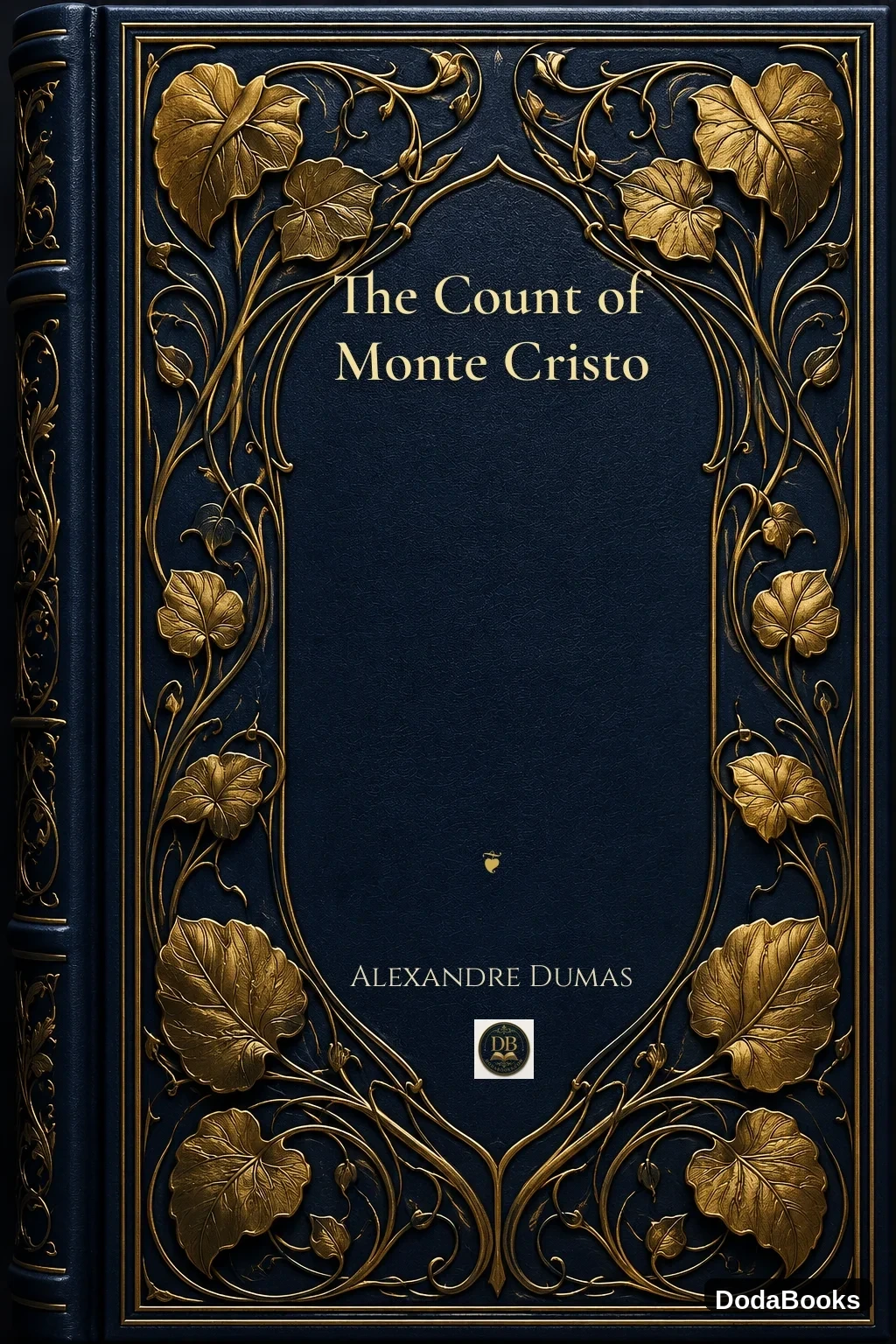
For collectors, students, and readers seeking the complete, unabridged English translation with comprehensive historical commentary, 19th-century French currency conversion charts, and Parisian maps, we recommend the edition from DodaBooks:
The Count of Monte Cristo (Unabridged Edition)
Experience Alexandre Dumas’ immortal tale of betrayal, transformation, and redemption in its complete, unabridged splendor. Featuring extensive historical notes on the Napoleonic Hundred Days, Italian carbonari, and 19th-century Parisian financial systems.
- Complete, authoritative unabridged 117-chapter text with zero Victorian censorship cuts
- Comprehensive footnotes on post-Restoration French politics and Marseille maritime history
- Exquisite custom 3D typography and digital formatting optimized for modern e-readers
- Instant EPUB download compatible with Kindle, Apple Books, and Android
Frequently Asked Questions
Why does Mercédès recognize Edmond Dantès when no one else in Paris can?
While fourteen years of physical suffering, intellectual education, and emotional hardening transformed Dantès’ voice, skin tone, and physical appearance beyond recognition for his enemies, Mercédès recognizes him instantly during his first visit to her salon. Because her love for Edmond was pure and unselfish, she perceives his true spiritual identity through his eyes and voice, remaining the only character in Paris to see through his disguise.
What is the role of Haydée in Dantès’ spiritual redemption?
Haydée, the Greek princess sold into slavery by Fernand Mondego and purchased by Dantès, begins as an instrument of Dantès’ vengeance against Morcerf. However, as the novel progresses, her unconditional devotion and love for Dantès soften his hardened heart. In the final chapter, Dantès realizes he is capable of loving again, sailing away into the Mediterranean with Haydée to begin a new life of peace.
How did Alexandre Dumas base The Count of Monte Cristo on a true crime story?
Dumas was inspired by the real-life memoirs of Jacques Peuchet, a Parisian police archivist. Peuchet recorded the case of François Picaud, a French shoemaker falsely accused of being an English spy by four jealous friends in 1807. After seven years in prison, Picaud befriended a wealthy Italian cleric who left him a vast fortune. Picaud assumed various disguises and systematically murdered his betrayers over ten years, providing Dumas with the factual seed for Dantès’ story.
Explore Related Literature Masterworks
Continue your exploration of classic world literature and epic narratives with our companion analyses:
- The Great Gatsby Study Guide: Summary, Analysis & Themes: Explore F. Scott Fitzgerald’s companion tragedy of self-invented identity, wealth, and the elusive green light.
- Moby-Dick Study Guide: Summary, Characters & Themes: Dive into Herman Melville’s monumental examination of monomaniacal obsession, revenge, and cosmic defiance.
- The Picture of Dorian Gray Study Guide: Discover Oscar Wilde’s exploration of aestheticism, moral corruption, and the consequences of indulgence.
- Crime and Punishment Study Guide: Summary & Analysis: Examine Dostoevsky’s psychological autopsy of transgression, rationalist hubris, and moral resurrection.