Jane Eyre Themes & Symbolism: Analysis of Central Motifs
Charlotte Brontë’s Jane Eyre (1847) is constructed upon a dense network of symbolic motifs, elemental dualities, and psychological archetypes. Rather than employing Gothic tropes for mere sensational effect, Brontë repurposes spectral laughter, haunted chambers, and prophetic omens into instruments of social critique and psychological investigation.
To uncover the novel’s enduring power, one must trace how these motifs chart Jane’s journey from a dependent, traumatized orphan to a spiritually sovereign, economically autonomous woman.
Central Thematic Structures
1. Spiritual Autonomy vs. Social and Patriarchal Bondage
At the heart of the novel is the struggle for female self-determination in a rigidly stratified Victorian society. As a penniless, plain orphan, Jane is repeatedly told by authority figures that she has no right to self-assertion:
- John Reed and Aunt Reed demand that she accept physical beatings and verbal degradation because she is a dependent living on their charity.
- Mr. Brocklehurst preaches that her natural hair and lively intelligence are sinful manifestations of pride that must be mortified through hunger and cold.
- Edward Rochester attempts to remake her into an adorned, exotic creature dripping in jewels, asking her to surrender moral law to become his companion in France.
- St. John Rivers demands that she sacrifice her emotional life entirely, enlisting her as an obedient instrument for his missionary campaign in India.
| Social Demand | Physical Crisis | Moral Resolution |
|---|---|---|
| “Accept charity and submit” | Imprisonment in the terrifying Red-Room | Fierce Rebellion: Openly confronts Mrs. Reed and denounces her hypocrisy. |
| “Be my kept mistress” | Interrupted bigamous wedding and revelation of Bertha | Flight into the Moors: Preserves personal integrity and self-respect despite poverty. |
| “Marry me for mission work” | Emotional coercion and threat of spiritual death by St. John | Sovereign Choice: Hears Rochester’s telepathic cry and returns as an equal partner. |
Jane’s triumph is that she rejects every attempt to commodify or instrumentalize her soul. Her integrity relies on an unshakeable belief that every human being possesses an innate dignity that transcends social status, money, or gender.
2. Erotic Passion vs. Moral Principle
Brontë does not portray romantic passion as inherently evil; on the contrary, Jane’s mutual attraction to Rochester is visceral, intellectual, and deeply reciprocal. Unlike conventional Victorian heroines whose love is timid and deferential, Jane confesses her passion with startling frankness.
However, Brontë presents passion divorced from moral law as a dangerous inferno that consumes the self. When Jane discovers that Rochester is legally married to Bertha Mason, Rochester begs her to live with him in a secluded villa in the South of France:
“Who in the world cares for you? or who will be injured by what you do?”
Still indomitable was the reply: “I care for myself. The more solitary, the more friendless, the more unsustained I am, the more I will respect myself. I will keep the law given by God; sanctioned by man. I will hold to the principles received by me when I was sane, and not mad—as I am now.”
By fleeing Thornfield with only a few shillings, Jane risks literal starvation rather than compromising her self-respect. She recognizes that to become a kept mistress is to surrender her status as an autonomous subject and become an object of male indulgence.
Symbolic Architecture & Recurring Motifs
1. The Red-Room: Childhood Trauma and Patriarchal Imprisonment
The Red-Room at Gateshead Hall is the primal psychological scene of the novel. It represents the terror of confinement, class tyranny, and the silencing of female dissent:
- Visual Architecture: Decorated in deep crimson velvet, mahogany furniture, and cold white draperies, the room contains the deathbed of Jane’s uncle, Mr. Reed. The color red evokes blood, anger, and danger, while the cold atmosphere evokes death and abandonment.
- The Looking-Glass: When young Jane glances into the massive mahogany mirror, she perceives her own reflection as a strange, pale phantom—a “tiny phantom, half fairy, half imp.” This moment marks Jane’s first profound experience of alienation: seeing herself as an exile from her own body and home.
- Psychological Recurrence: The trauma of the Red-Room returns at every crisis of captivity in Jane’s life. When locked inside, Jane experiences a fit of terror, believing she sees her uncle’s ghost. Later, in Chapter 27, when agonizing over whether to become Rochester’s mistress, the moon appears in the sky bearing the maternal spirit that commands her: “My daughter, flee temptation!"—echoing the visionary terror of the Red-Room.
2. Bertha Mason as Psychological Doppelgänger
In Sandra Gilbert and Susan Gubar’s seminal feminist text The Madwoman in the Attic (1979), Bertha Mason is identified not merely as a Gothic villain, but as Jane’s externalized psychological double:
- The Unconscious id: Bertha embodies the fierce anger, physical passion, and violent rebellion that Victorian society forced Jane to repress. When Jane feels suffocated by the narrow boundaries of female existence, she paces the battlements of Thornfield Hall. It is from the attic directly beneath her feet that Bertha’s terrifying, sardonic laugh reverberates.
- The Destruction of the Bridal Veil: On the eve of Jane’s wedding, Bertha creeps into Jane’s bedchamber, places the expensive veil Rochester bought over her own head, stares into the mirror, and then tears it down the middle, trampling it underfoot. In doing so, Bertha performs the very act of rejection that Jane unconsciously craves: destroying the symbol of Rochester’s attempt to transform Jane into an aristocratic possession.
- The Purifying Conflagration: By burning Thornfield Hall to ashes, Bertha destroys the physical embodiment of Rochester’s ancestral dominance and imperial corruption, liberating both Jane and Rochester from the prison of the past.
| Dimension | Jane Eyre | Bertha Mason |
|---|---|---|
| Social Position | Impoverished, dependent governess | Wealthy Jamaican Creole heiress |
| Physical Demeanor | Small, plain, disciplined, and self-contained | Tall, sensual, physically ferocious |
| Verbal Expression | Highly articulate, rational, and morally principled | Mute snarling, guttural cries, and mocking demonic laughter |
| Psychological State | Consciously restrained passion and active conscience | Unfiltered primal rage, raw desire, and incendiary revenge |
| Ultimate Fate | Moral sovereignty and egalitarian marriage at Ferndean | Destructive leap from the burning battlements of Thornfield |
3. Elemental Dualism: Fire vs. Ice
Brontë orchestrates the novel around the recurring symbolic conflict between Fire (passion, vital warmth, destructive desire) and Ice (emotional coldness, rigid dogmatism, death):
The Fire Motif
- Jane’s Fiery Spirit: Jane is repeatedly described as possessing an inner fire. Rochester observes that she has “an inner fire” that flashes in her eyes when she is provoked.
- Destructive Fire: Fire becomes literal when Bertha sets Rochester’s bedcurtains ablaze in Chapter 15, and later when she incinerates Thornfield Hall. Fire is creative when tempered by conscience, but annihilating when unleashed as unbridled passion.
The Ice Motif
- Lowood’s Bitter Frost: At Lowood School, the girls wake to frozen washbasins and march through deep snow with chapped hands, symbolizing Brocklehurst’s cold, deadening religious dogma.
- St. John’s Frozen Heart: St. John Rivers is consistently associated with ice, marble, and snow:
“He was of the cold, hard, ambitious nature… His heart had been frozen. He was of the granite rock.”
- His marriage proposal represents an invitation to freeze to death spiritually: to submit to an emotional winter where affection is crushed beneath abstract duty.
Lowood's freezing washbasins, Brocklehurst's mortification, and St. John Rivers's granite missionary duty that demands emotional annihilation.
Bertha's bedcurtain arson, Rochester's feverish Mediterranean temptations, and the unbridled flames that incinerate Thornfield Hall.
Moral conscience harmonized with genuine human warmth: vital passion tempered by mutual respect, equality, and ethical integrity.
4. The Lightning-Struck Chestnut Tree
The great horse-chestnut tree in the orchard at Thornfield serves as a crucial prophetic symbol of Jane and Rochester’s relationship:
- In Chapter 23, Rochester proposes to Jane beneath the ancient tree during a warm midsummer night. The scene appears pastoral and romantic, yet it is tainted by Rochester’s deceit regarding his living wife.
- That very night, a violent storm breaks over Thornfield. A lightning strike splits the massive chestnut tree down the middle, leaving the two halves standing ruptured and blackened.
- The split tree foreshadows the catastrophic rupture of their impending wedding. Though the two halves remain rooted in the same soil, they cannot unite until the diseased trunk of Rochester’s deception has been burned away.
5. Birds and Cages: The Yearning for Freedom
Avian imagery recurs throughout the narrative to signify the flight of the human spirit:
- In Chapter 1 at Gateshead, young Jane seeks refuge in a window seat with Thomas Bewick’s History of British Birds, identifying with sea fowl that inhabit desolate, Arctic rocks.
- Rochester frequently compares Jane to a wild, caged bird:
“I see at intervals the glance of a curious sort of bird through the close-set bars of a cage: a vivid, restless, resolute captive is there; were it but free, it would soar cloud-high.”
- Jane famously repudiates his patronizing metaphor:
“I am no bird; and no net ensnares me; I am a free human being with an independent will, which I now exert to leave you.”
Symbolic Motif Matrix
| Motif / Symbol | Primary Location | Psychological Dimension | Sociological / Theological Meaning |
|---|---|---|---|
| The Red-Room | Chapter 2 (Gateshead) | Primal childhood trauma and fear | The violent silencing of female rebellion and orphan dependency |
| Bertha’s Laugh | Chapter 11 (Thornfield) | Repressed anger and sexual longing | The grotesque eruption of suppressed female rage against patriarchy |
| The Torn Veil | Chapter 25 (Thornfield) | Unconscious rejection of servitude | Defiance of commodification; refusal to be adorned as a concubine |
| The Split Chestnut | Chapter 23 (Orchard) | Fracture of an unnatural bond | Divine judgment against Rochester’s bigamous deception |
| The Moor Wilderness | Chapter 28 (Whitcross) | Absolute desolation and death | The spiritual wilderness; surrender to the mercy of nature and God |
| The Maimed Hand / Blindness | Chapter 37 (Ferndean) | Castration of patriarchal dominance | Expiation through suffering; Rochester humbled to meet Jane as an equal |
Recommended Critical Editions
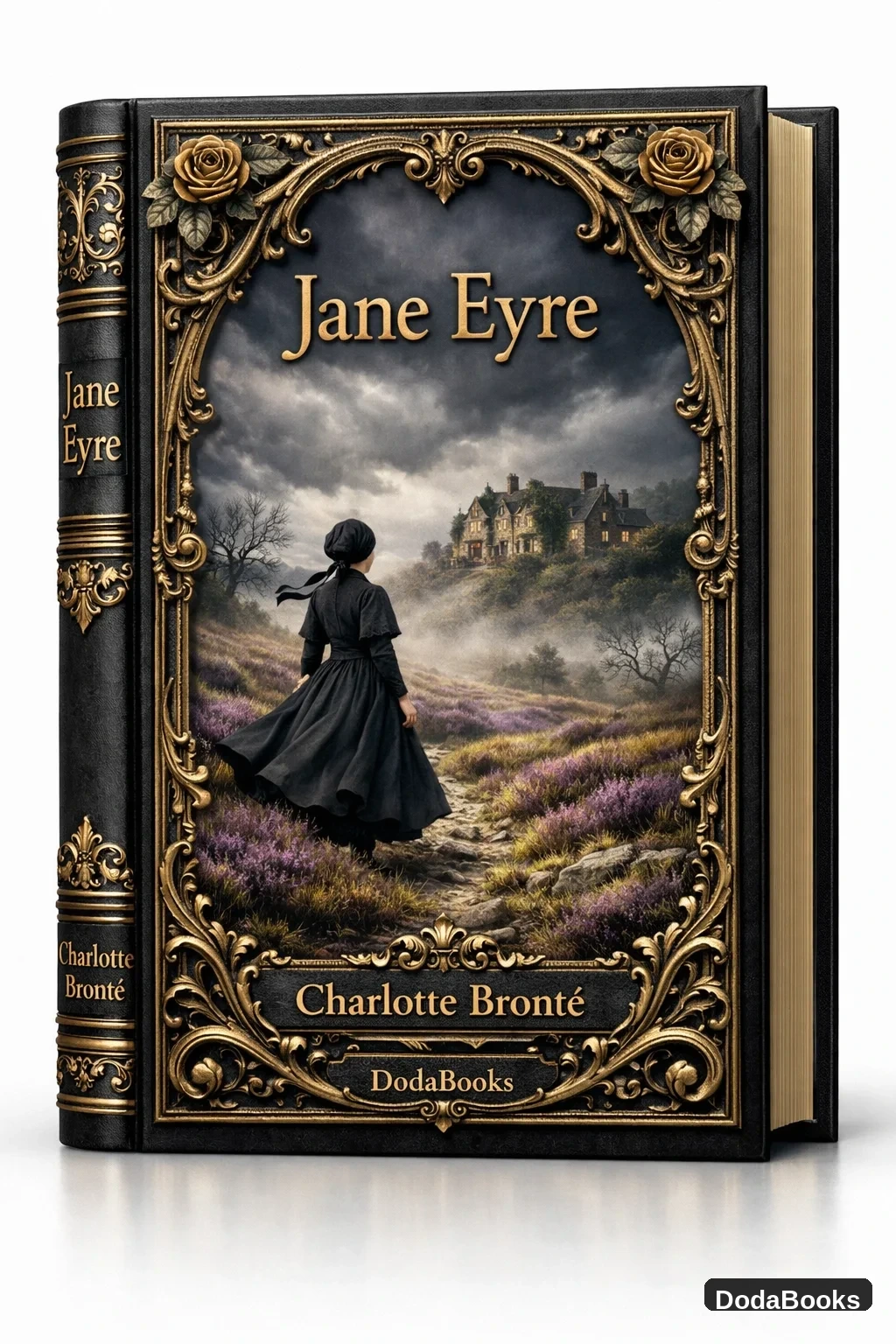
Jane Eyre: The Annotated Feminist & Historical Edition
Includes the complete 1847 text with 260+ annotations on Victorian governess contracts, Lowood School parallels, Bertha Mason colonial essays, and manuscript notes.
- ✓ Unabridged 1847 First Edition
- ✓ 260+ Scholarly Historical & Legal Footnotes
- ✓ Victorian Governess Contract Collation
- ✓ Instant DRM-Free EPUB & PDF Download
Related Literature Study Guides
Explore our comprehensive library of literary masterwork analyses:
- Jane Eyre Study Guide: The definitive master guide to Brontë’s novel, featuring chapter breakdowns and governess analysis.
- Pride and Prejudice Themes & Symbolism: Social class, Pemberley estate, letter-writing, and dance in Jane Austen.
- Frankenstein Themes & Symbolism: The Modern Prometheus, fire and ice, monstrous doubles, and scientific hubris.
- Crime and Punishment Themes & Symbolism: The Extraordinary Man theory, yellow fever motif, and Lazarus resurrection.
- The Great Gatsby Themes & Symbolism: The green light, the Valley of Ashes, the eyes of Dr. T.J. Eckleburg, and time.
- Moby-Dick Themes & Symbolism: The white whale, the doubloon, the try-works, and cosmic defiance in Herman Melville.
- The Pequod in Moby-Dick: Ship Meaning & Symbolism: The barbaric architecture and 30-man union microcosm of Melville’s doomed whaleship.
Frequently Asked Questions
What does the Red-Room symbolize in Jane Eyre?
The Red-Room at Gateshead Hall represents the terrifying nexus of childhood trauma, patriarchal imprisonment, and societal oppression. As the chamber where Jane’s uncle died, its blood-red drapery and freezing atmosphere symbolize the suffocating anger and physical confinement Jane suffers under the Reed family. The psychological trauma of the Red-Room recurs whenever Jane faces male domination or captivity throughout the novel.
How does the split chestnut tree foreshadow subsequent plot events?
In Chapter 23, immediately after Rochester proposes to Jane in the orchard under the old horse-chestnut tree, a violent thunderstorm erupts and a lightning strike splits the massive trunk in two. This natural catastrophe serves as a prophetic omen that Rochester and Jane’s union is unnatural and illegal due to Bertha Mason’s hidden existence, foreshadowing the rupture of their impending wedding.
How do fire and ice function as symbolic opposites throughout the novel?
Fire represents passion, vitality, anger, and physical desire, primarily associated with Jane’s inner fiery spirit, Bertha Mason’s arson, and Rochester’s volatile sensuality. Conversely, ice represents cold emotional detachment, patriarchal cruelty, and religious dogmatism, embodied by the bitter winters of Lowood School, Mr. Brocklehurst’s frozen charity, and St. John Rivers’ austere missionary fanaticism.