The Great Gatsby Characters: Jay Gatsby & Foils
When F. Scott Fitzgerald published The Great Gatsby in April 1925, he produced the definitive anatomy of the American Jazz Age. Across nine tightly compressed chapters set during the boiling summer of 1922 on Long Island and in New York City, Fitzgerald crafts a psychological opera where raw commercial ambition, romantic obsession, and entrenched class brutality collide.
At the heart of the novel’s enduring power is its unforgettable constellation of characters. Rather than presenting generic caricatures of 1920s flappers and bootleggers, Fitzgerald endows each figure with sociological precision and mythic resonance. From Jay Gatsby’s desperate struggle to purchase the past with criminal gold to Tom and Daisy Buchanan’s savage, insulated retreat into generational wealth, the cast embodies the profound disillusionment beneath the glittering surface of the American Dream.
While our The Great Gatsby Study Guide traces the novel’s historical context and The Great Gatsby Themes & Symbolism examines its motifs, this character analysis provides an exhaustive academic exploration of the psychological dynamics, structural foils, and moral architectures governing Fitzgerald’s masterpiece.
Complete Character Roster & Structural Foils Matrix
Fitzgerald structures his novel around acute geographic and economic contrasts, balancing the romantic illusions of West Egg against the entrenched privilege of East Egg:
| Character | Social / Geographic World | Core Motivation | Fatal Flaw / Vulnerability | Ultimate Fate |
|---|---|---|---|---|
| Jay Gatsby (James Gatz) | West Egg; Nouveau Riche; Bootlegger | Reclaiming Daisy; repeating the past; self-creation | Conflates spiritual love with material display; blind to class reality | Shot dead in his marble swimming pool by George Wilson |
| Daisy Buchanan | East Egg; Old Money Aristocracy | Social security, luxury, effortless comfort | Emotional cowardice, moral carelessness, passivity | Retreats into her inherited fortune with Tom; abandons Gatsby |
| Nick Carraway | West Egg (Rental Cottage); Yale / Bonds | Finding moral truth; financial purpose in the East | Conflicted moral complicity; judgmental hypocrisy | Disillusioned by Eastern decadence; returns to the Midwest |
| Tom Buchanan | East Egg; Yale Football Star; Billionaire | Dominating others; preserving racial and class hegemony | Cruel brute force, hypocrisy, intellectual insecurity | Conspires with Daisy; directs Wilson to murder Gatsby |
| Jordan Baker | High Society; Professional Golfer | Maintaining cynical independence, avoiding vulnerability | Incurable dishonesty, emotional detachment, carelessness | Rejected by Nick; marries another wealthy society man |
| Myrtle Wilson | Valley of Ashes; Working Class | Escaping poverty and industrial grimness | Desperate social climbing; tragic vulgarity | Struck down and killed by Daisy driving Gatsby’s yellow car |
| George Wilson | Valley of Ashes; Auto Mechanic | Surviving poverty; honest labor; loving Myrtle | Deranged grief; theological confusion; manipulation by Tom | Murders Gatsby at his pool, then commits suicide with revolver |
| Meyer Wolfsheim | Manhattan Underworld; Gambler | Commercial profit, criminal syndicate control | Total absence of sentimental loyalty to associates | Refuses to attend Gatsby’s funeral to avoid police scrutiny |
1. Jay Gatsby: The Myth of Self-Creation and the Tragic Flaw
Jay Gatsby is the supreme romantic titan of twentieth-century American literature. Born James Gatz to shiftless, impoverished German-American farmers in North Dakota, he repudiates his parentage at sixteen, determined to forge his destiny according to an idealized vision of greatness:
“The truth was that Jay Gatsby of West Egg, Long Island, sprang from his Platonic conception of himself. He was a son of God—a phrase which, if it means anything, means just that—and he must be about His Father’s business, the service of a vast, vulgar, and meretricious beauty.”
The Paradox of Gatsby’s Greatness
What makes Gatsby “great” in Nick Carraway’s eyes is not his lavish wealth, but his capacity for faith. In a cynical world dominated by the predatory selfishness of Tom Buchanan and the exhausted detachment of Jordan Baker, Gatsby alone believes in the absolute redeemability of time:
- “Can’t Repeat the Past?”: When Nick cautions him that one cannot recreate five lost years, Gatsby cries out incredulously: “Can’t repeat the past? Why of course you can!” He believes that sheer human willpower, fortified by millions of dollars, can erase Daisy’s marriage, daughter, and lived history.
- The Tragedy of Materialization: Gatsby’s fatal error is anchoring his infinite spiritual longing to an unworthy mortal vessel. Daisy Buchanan is not a goddess; she is a selfish, vacillating southern belle who panics under pressure. The moment he takes Daisy in his arms, the colossal vitality of his five-year-old illusion begins to collapse under the weight of her mundane reality.
2. Daisy Buchanan: The Golden Siren of East Egg
Daisy Fay Buchanan is the glittering prize around which the narrative rotates:
- The Voice Full of Money: Fitzgerald repeatedly characterizes Daisy through her extraordinary acoustic magnetism. When Nick first hears her speak, her voice is a glowing, fluctuating rhythm that captivates listeners:
“It was the kind of voice that the ear follows up and down, as if each speech is an arrangement of notes that will never be played again… Her voice is full of money—that was the inexhaustible charm that rose and fell in it, the jingle of it, the cymbals’ song of it… high in a white palace the king’s daughter, the golden girl.”
- The Mask of Cynicism: Daisy affects a posture of sophisticated world-weariness, telling Nick: “I’ve been everywhere and seen everything and done everything… Sophisticated—God, I’m sophisticated!” Yet this cynicism is merely an emotional shield to excuse her moral passivity.
- The Crucial Capitulation: When confronted by Gatsby and Tom in the Plaza Hotel suite, Daisy breaks under Tom’s aggressive cross-examination. She loves Gatsby, but she cannot truthfully say she never loved Tom. When forced to choose between Gatsby’s precarious criminal empire and Tom’s rock-solid generational fortune, she retreats instinctively to the security of East Egg.
- The Hit-and-Run Cowardice: Driving Gatsby’s yellow Duesenberg to steady her nerves, Daisy strikes and kills Myrtle Wilson in the Valley of Ashes. Rather than stopping or confessing, she accelerates into the night, allowing Gatsby to protect her and letting Tom orchestrate Gatsby’s murder while she packs her luggage to slip away on vacation.
3. Nick Carraway: The Conflicted Moral Chronicler
Nick Carraway is both narrator and participant—the lens through which we view Gatsby’s tragedy:
- The Midwestern Perspective: Hailing from a prominent, respectable Minnesota clan, Nick moves to New York in the spring of 1922 to learn the bond business, seeking excitement after serving in World War I.
- The Double Vision of the Outsider: Nick describes his own cognitive position as “within and without, simultaneously enchanted and repelled by the inexhaustible variety of life.” This psychological ambivalence allows him to observe the decadence of Long Island with critical distance, even as he facilitates Gatsby and Daisy’s illicit reunion.
- The Final Moral Judgment: In Chapter 9, Nick delivers the novel’s devastating verdict on the American ruling class:
“They were careless people, Tom and Daisy—they smashed up things and creatures and then retreated back into their money or their vast carelessness, or whatever it was that kept them together, and let other people clean up the mess they had made.”
- The Departure from the East: Shattered by Gatsby’s murder and the total indifference of his former party guests, Nick breaks off his relationship with Jordan Baker and returns to the Midwest, seeking moral order in a world of quiet winter trains and snow-covered prairies.
4. Tom Buchanan: The Brutal Hegemony of Old Money
Tom Buchanan represents the aggressive, predatory core of entrenched American aristocracy:
- Physical Dominance: Tom is introduced through his imposing physique: a massive, thirty-year-old former Yale football star with “a cruel body” and aggressive posture that intimidates everyone in his presence.
- Racial Anxiety and Intellectual Insecurity: Deeply unsettled by the changing demographics of modern America, Tom eagerly spouts pseudoscientific white supremacist theories derived from Goddard and Stoddard (The Rise of the Colored Empires): “The idea is if we don’t look out the white race will be—will be utterly submerged.” His racism reveals an elite class terrified of losing its inherited dominance.
- Hypocritical Morality: While maintaining an openly vulgar, violent mistress in New York (breaking Myrtle’s nose with an open palm when she mentions Daisy’s name), Tom poses as a pious defender of family values when exposing Gatsby’s bootlegging: “Nowadays people begin by sneering at family life and family institutions, and next they’ll throw everything overboard and have intermarriage between black and white.”
- The Architect of Execution: Tom demonstrates cold cruelty when confronted by the armed, weeping George Wilson. He directs Wilson to Gatsby’s mansion, knowing Wilson will execute Gatsby, and later justifies his cowardice to Nick: “That fellow had it coming to him… He ran over Myrtle like you’d beat a dog.”
5. The Valley of Ashes Foils: Myrtle & George Wilson
The Wilsons represent the discarded human collateral of the Jazz Age, living beneath the giant, unblinking billboard eyes of Dr. T.J. Eckleburg:
Comparative Matrix: Character Foils & Archetypes
| Base Character | Foil Character | Central Thematic Contrast |
|---|---|---|
| Jay Gatsby | Tom Buchanan | Self-made romantic visionary vs. inherited old-money brute. |
| Daisy Buchanan | Myrtle Wilson | Effortless, ethereal aristocratic charm vs. desperate, full-bodied working-class vitality. |
| Nick Carraway | Jordan Baker | Scrupulous moral observation vs. detached, dishonest modern cynicism. |
| Jay Gatsby | George Wilson | The romantic dreamer who dies for Daisy vs. the deranged husband who kills for Myrtle. |
| Nick Carraway | Meyer Wolfsheim | Loyal friend who stands by Gatsby in death vs. mobster who abandons Gatsby to avoid the police. |
Recommended Critical Edition
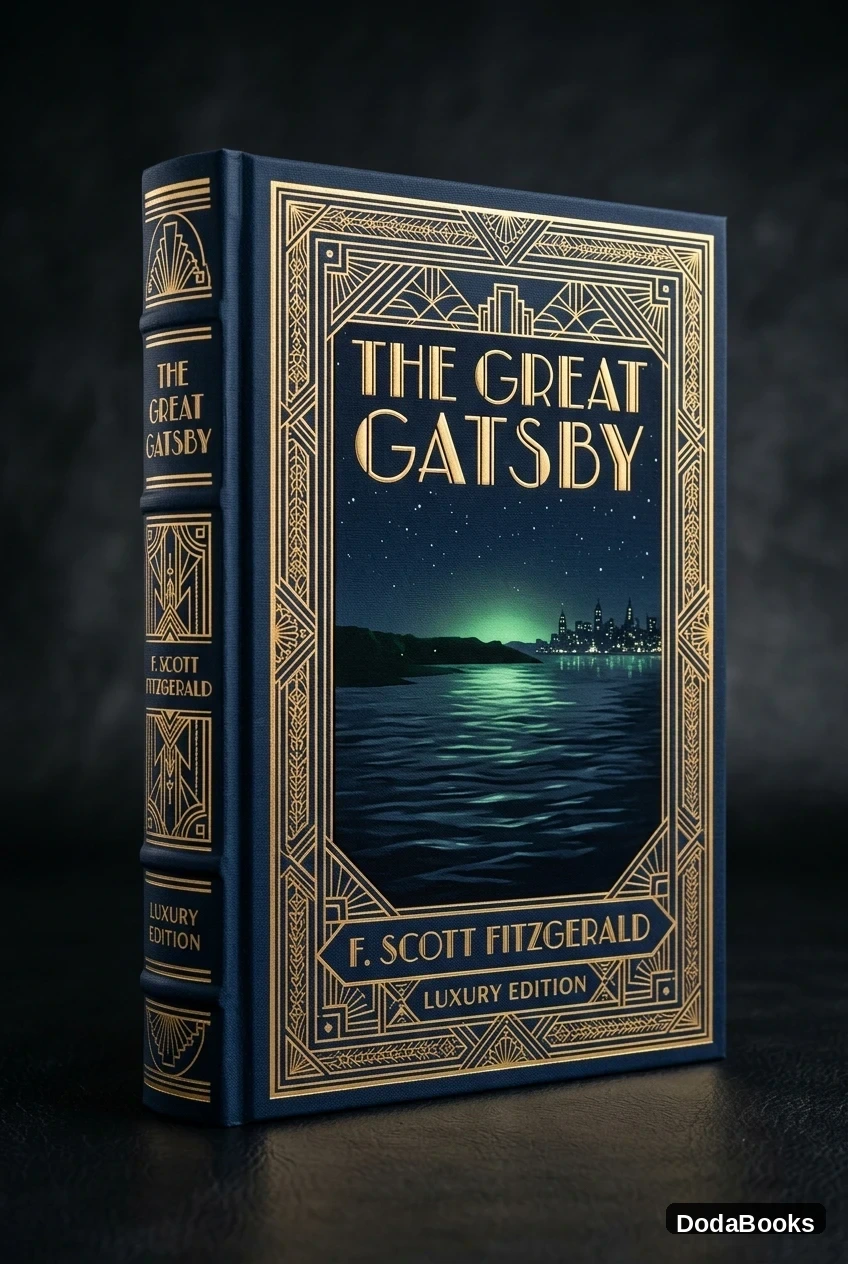
For literature professors, high school educators, and students seeking the authoritative text with historical notes on 1920s Prohibition, Long Island geography, and Fitzgerald’s working drafts, we recommend the unabridged edition from DodaBooks:
Frequently Asked Questions
Why does nobody attend Jay Gatsby’s funeral except Nick, Owl Eyes, and Gatsby’s father?
The utter absence of mourners at Gatsby’s funeral underscores the hollow, transactional nature of Jazz Age high society. Hundreds of glamorous guests frequented Gatsby’s weekend parties, drank his champagne, and swam in his marble pool, yet none of them knew or cared about the human being behind the entertainment. When Gatsby dies, his former business partners (like Meyer Wolfsheim) and social acquaintances (like Klipspringer, who calls only to ask for his missing tennis shoes) instantly desert him to avoid scandal, leaving only Nick, his broken father Henry Gatz, and the observant eccentric “Owl Eyes” to witness his burial in the rain.
What is the significance of Henry Gatz showing Nick the childhood schedule in Hopalong Cassidy?
When Gatsby’s elderly father arrives from Minnesota, he proudly shows Nick a childhood copy of Hopalong Cassidy in which young Jimmy Gatz had written a daily schedule and resolutions: wake up at 6:00 AM, practice dumbbell exercises, study electricity and inventions, and cultivate poise. This poignant artifact proves that Gatsby was not an accidental crook, but an authentic disciple of Benjamin Franklin’s American Protestant ethic. His tragic downfall occurred not because he lacked ambition or discipline, but because American society offered no legitimate meritocratic pathway to achieve the social status possessed by inherited aristocrats like Tom Buchanan.
Why is Jordan Baker characterized as incurably dishonest?
Jordan Baker’s dishonesty reflects the moral cynicism of the post-war flapper generation. She cheats in her first major golf tournament by kicking her ball out of the rough and habitually lies about minor domestic details (such as leaving a borrowed convertible out in the rain with the top down and lying about it). Unlike Gatsby, whose dishonesty serves a noble, romantic vision of transcendent love, Jordan’s dishonesty is defensive and self-serving—designed to protect her from emotional vulnerability and avoid accountability for her careless driving.
Related Masterwork Guides & Deconstructions
Continue your exploration of classic American and world literature with our companion guides:
- The Great Gatsby Study Guide: Themes, Symbols & 1920s: The foundational comprehensive study guide to Fitzgerald’s masterpiece.
- The Great Gatsby Themes & Symbolism: Analysis of Motifs: Deconstruct the green light, Dr. T.J. Eckleburg, and the Valley of Ashes.
- The Picture of Dorian Gray Themes & Symbolism: Examine aestheticism, youth worship, and moral corruption in Victorian high society.
- The Count of Monte Cristo Characters: Dantès & Foils: Analyze self-invented identity, vast wealth, and retribution.
- Frankenstein Characters Analysis: Victor & Creature: Explore Promethean ambition and the tragic consequences of playing God.